
2026 Top Types of Energy Solutions for Global Buyers
Global buyers are entering a more demanding energy market. Energy solutions now span solar power, wind systems, battery storage, green hydrogen, smart grids, and efficiency technologies. The strongest choices must balance cost, reliability, emissions, maintenance, and local infrastructure.
The International Energy Agency reported in World Energy Outlook 2024 that electricity demand is rising faster than overall energy demand. Its analysis also highlights rapid growth in renewables, electric vehicles, cooling, and data centres. IRENA’s Renewable Capacity Statistics 2025 recorded 585 gigawatts of renewable capacity added worldwide during 2024. Renewables represented more than 90% of total new power capacity. The numbers are impressive. They are not equally accessible.
Fatih Birol, Executive Director of the IEA, said, “The world is entering an Age of Electricity.” That shift changes procurement decisions. Buyers need flexible systems, dependable suppliers, and measurable performance data. A solar project may look attractive on paper, yet weak grid connections can delay its value. Batteries can reduce peak costs, but replacement planning remains essential. Hydrogen offers industrial potential, although infrastructure and pricing are still developing.
This article examines the top types of energy solutions for global buyers in 2026. It considers proven technologies and emerging options. It also recognises uncomfortable gaps. Forecasts can miss policy changes, extreme weather, and supply-chain pressure. No solution fits every market. Careful evaluation remains more valuable than fashionable claims.
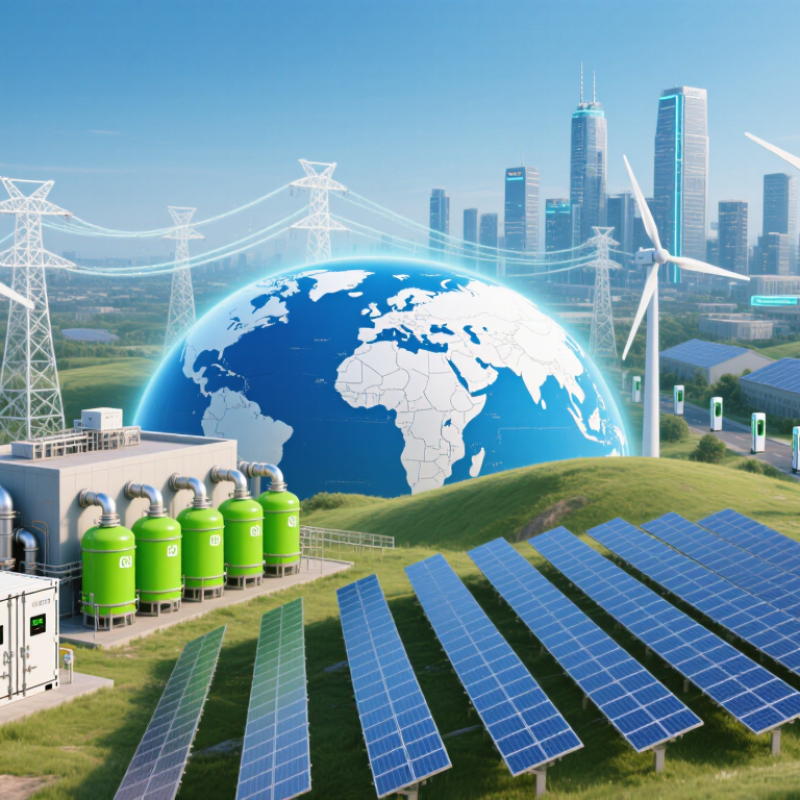
Energy Solutions: Definition, Scope, and Global Market Context
Energy Solutions: Definition, Scope, and Global Market Context
Energy solutions are systems that produce, move, store, or reduce energy use. They include renewable generation, efficient equipment, battery storage, smart grids, electrified transport, and demand-response controls. For global buyers, the scope is broader than purchasing solar panels or turbines. It also covers financing, installation, maintenance, cybersecurity, and measurable carbon performance.
The International Energy Agency reported that global energy investment could reach about 3 trillion dollars in 2024. Clean-energy investment accounts for roughly 2 trillion dollars. This shift shows stronger demand for efficiency, storage, grid upgrades, and low-emission power. IRENA recorded 473 gigawatts of renewable capacity added in 2023. Renewables represented 86% of new global power capacity that year.
Yet market comparisons remain difficult. Different reports define “clean energy” differently. A battery project may improve reliability, but its emissions depend on manufacturing and electricity inputs. A factory may reduce consumption while increasing production. The result is useful, but not automatically sustainable.
Practical buyers should examine lifetime cost, local grid conditions, warranty terms, safety standards, and verified performance data. They should also ask how suppliers measure savings after installation. One dashboard is not enough. Energy needs vary sharply between a cold warehouse, a coastal data center, and a rural clinic. Global energy solutions are therefore not a single product category. They are adaptable packages shaped by infrastructure, policy, climate, and operational experience.
| Energy Solution Type | Definition and Scope | Primary Buyer Applications | Key Technical Characteristics | Global Market Reference | Procurement Priorities | Reference Basis |
|---|---|---|---|---|---|---|
| Solar Photovoltaic (PV) | Converts sunlight directly into electricity through photovoltaic modules. Includes utility-scale, commercial and industrial, residential, floating, and off-grid systems. | Utility generation Commercial rooftops Mini-grids Off-grid power | Modular and rapidly deployable; output varies with solar irradiation, season, temperature, and system orientation. Battery storage can improve evening supply and grid flexibility. | 1,419 GW of installed global capacity at the end of 2023; approximately 346 GW of capacity was added during 2023. | Module efficiency, degradation rate, temperature coefficient, warranty terms, inverter compatibility, land or roof availability, grid connection, and recycling arrangements. | IRENA, Renewable Capacity Statistics 2024 |
| Onshore Wind | Generates electricity from land-based wind turbines. Projects range from distributed turbines to large wind farms connected to transmission networks. | Utility generation Industrial power Hybrid projects | Produces electricity when wind conditions are suitable; commonly evaluated through wind-speed distribution, capacity factor, hub height, rotor diameter, and wake effects. | 1,017 GW of installed global wind capacity at the end of 2023, including onshore and offshore wind; approximately 116 GW of wind capacity was added during 2023. | Wind resource assessment, turbine availability, transport routes, foundation design, noise limits, wildlife and land-use requirements, grid interconnection, and long-term service support. | IRENA, Renewable Capacity Statistics 2024 |
| Offshore Wind | Uses wind resources over oceans, seas, or large bodies of water. Includes fixed-bottom and floating foundation systems. | Coastal power supply Large-scale generation Industrial demand | Generally benefits from stronger and more consistent wind resources than many land-based sites, but requires marine construction, subsea cables, specialized vessels, and port infrastructure. | Offshore wind represented approximately 76 GW of global installed capacity at the end of 2023, based on IRENA technology-level capacity data. | Water depth, seabed conditions, distance to shore, cable route, port capacity, environmental permitting, corrosion protection, installation weather windows, and operations access. | IRENA, Renewable Capacity Statistics 2024; IEA, Renewables 2023 |
| Hydropower | Generates electricity from the movement or elevation difference of water. Solutions include reservoir, run-of-river, pumped-storage, and small hydropower. | Baseload supply Peak demand Grid balancing Rural electrification | Can provide dispatchable generation and system flexibility. Performance depends on hydrology, reservoir management, water availability, environmental flows, and civil infrastructure. | 1,268 GW of installed global hydropower capacity at the end of 2023, excluding pumped storage in the standard renewable-capacity category. | Water resource studies, sediment management, dam safety, drought exposure, biodiversity impacts, social safeguards, construction duration, and transmission requirements. | IRENA, Renewable Capacity Statistics 2024 |
| Bioenergy | Produces heat, electricity, or fuels from organic materials such as agricultural residues, forestry by-products, organic waste, biogas, and sustainable energy crops. | Industrial heat Combined heat and power Waste management Renewable fuels | Can provide controllable output and utilize local residues. Sustainability depends on feedstock origin, land-use effects, logistics, emissions controls, and competing uses of biomass. | 143 GW of installed global bioenergy power capacity at the end of 2023. | Feedstock availability, moisture content, supply radius, sustainability certification, boiler or digester design, air emissions, ash handling, storage, and fuel-price exposure. | IRENA, Renewable Capacity Statistics 2024; IEA, Renewables 2023 |
| Geothermal Energy | Uses heat from the Earth for electricity generation, direct heating, district heating, greenhouse applications, and industrial processes. | Continuous generation District heating Industrial heat Ground-source systems | Provides high availability where suitable resources exist. Project risk is concentrated in resource exploration, drilling, reservoir performance, scaling, and corrosion management. | Approximately 15 GW of installed global geothermal power capacity at the end of 2023. | Resource temperature, drilling depth, reservoir permeability, reinjection plan, water chemistry, induced-seismicity controls, permitting, and local heat demand. | IRENA, Renewable Capacity Statistics 2024; IEA, The Future of Geothermal 2024 |
| Battery Energy Storage | Stores electricity electrochemically and releases it later. Systems may be paired with renewable generation, installed at substations, or located behind the meter. | Peak shifting Frequency regulation Renewable integration Backup power | Key characteristics include power rating in MW, energy capacity in MWh, duration, round-trip efficiency, response time, cycle life, state-of-charge limits, and thermal management. | Global battery storage additions reached approximately 42 GW in 2023, according to the IEA; most new deployments were lithium-ion systems. | Usable energy, degradation warranty, safety certifications, fire protection, augmentation plan, ambient temperature range, software interoperability, recycling, and grid-code compliance. | IEA, Batteries and Secure Energy Transitions 2024; IEA, Renewables 2024 |
| Energy Efficiency and Demand Response | Reduces energy consumption or shifts electricity use through efficient equipment, building upgrades, process optimization, automation, and flexible-load management. | Buildings Manufacturing Data facilities Commercial loads | Common measures include efficient motors, variable-speed drives, heat pumps, insulation, high-performance lighting, energy-management systems, and automated load control. | Global energy-efficiency progress improved to approximately 2.2% in 2022, but the IEA reported that the rate needed to accelerate substantially to meet international efficiency goals. | Baseline definition, verified savings, equipment lifetime, payback period, operating profile, measurement and verification, control-system integration, and non-energy benefits. | IEA, Energy Efficiency 2023 |
| Smart Grids and Transmission | Combines grid infrastructure, digital monitoring, automation, advanced controls, and expanded transmission or distribution capacity to manage changing power flows. | Renewable integration Microgrids Grid resilience Electrification | Includes substations, power lines, transformers, protection systems, sensors, advanced meters, forecasting, distributed-energy controls, and flexibility platforms. | Global investment in grids was expected to reach approximately USD 400 billion in 2024, according to the IEA, reflecting rising electrification and renewable-integration requirements. | Voltage and frequency requirements, hosting capacity, cybersecurity, interoperability, outage performance, protection coordination, permitting, and future load-growth assumptions. | IEA, World Energy Investment 2024; IEA, Electricity Grids and Secure Energy Transitions 2023 |
| Green Hydrogen and Derivatives | Hydrogen produced through water electrolysis powered by renewable electricity, together with derivatives such as renewable ammonia, methanol, and synthetic fuels. | Steelmaking Chemical feedstock Shipping fuels Seasonal storage | Systems include electrolyzers, renewable power supply, water treatment, compression, storage, transport, and end-use equipment. Overall performance depends strongly on electricity utilization and conversion losses. | Global installed electrolyzer capacity reached approximately 1.4 GW in 2023, while the IEA reported a large announced project pipeline subject to policy, infrastructure, and offtake decisions. | Electricity source and emissions intensity, electrolyzer efficiency, operating hours, water quality, hydrogen purity, storage pressure, safety management, certification, and firm offtake. | IEA, Global Hydrogen Review 2024; IEA, Global Hydrogen Review 2023 |
| Waste-to-Energy | Recovers energy from non-recyclable municipal or industrial waste through controlled thermal treatment, anaerobic digestion, landfill-gas recovery, or refuse-derived fuel systems. | Municipal services District heating Waste reduction Local power | Can reduce landfill dependence and supply dispatchable energy, but requires strict feedstock controls, emissions treatment, residue management, and alignment with waste-prevention policies. | Biomass and waste together accounted for approximately 143 GW of global bioenergy power capacity at the end of 2023, with waste-to-energy forming a subset of this category. | Waste composition, calorific value, collection contracts, air-pollution controls, ash disposal, recycling hierarchy, heat offtake, permitting, and community acceptance. | IRENA, Renewable Capacity Statistics 2024; IEA, Renewables 2023 |
Related Posts
-
10 Tips for Buying Energy Solutions Worldwide
-
What Are Energy Solutions and How Do They Work?
-
China Top 10 Energy Solutions Suppliers for Global Buyers
-
Top Solar Energy Solutions for a Sustainable Future?
-
How to Choose the Best Solar Technology for Your Business?
-
Top 10 Solar Solutions for Global Buyers to Consider?