Eco Energies

How to Choose the Best Solar Technology for Your Business?

Selecting the right solar technology for your business can seem daunting. As solar energy expert Dr. Emily Fields states, "Choosing the right technology is crucial for sustainability." This highlights the importance of informed decisions in solar technology integration.

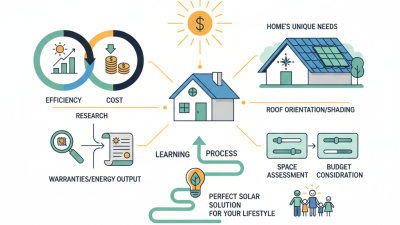
It's vital to consider various factors like system efficiency, cost, and specific business needs. Solar technology options have grown, providing tailored solutions. For example, rooftop panels are ideal for small businesses, while larger enterprises might benefit from solar farms.

While the benefits are significant, the decision-making process can be tedious. Business owners must weigh their budget against potential energy savings. Sometimes, it may feel overwhelming. However, investing time into selecting the best solar technology pays off in the long run. Your business can thrive while contributing to environmental sustainability.
How to Choose the Best Solar Technology for Your Business?

Understanding Different Types of Solar Technologies for Businesses
How to Choose the Best Solar Technology for Your Business?

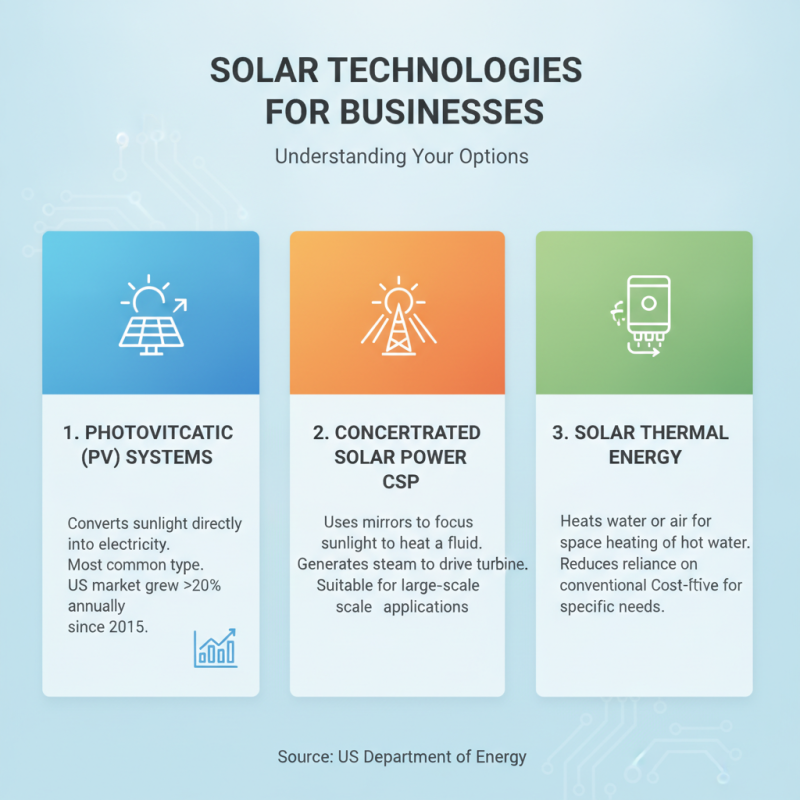
When selecting solar technology for your business, understanding the various types available is crucial. There are three primary options: photovoltaic (PV) systems, concentrated solar power (CSP), and solar thermal energy. PV systems, which convert sunlight directly into electricity, are the most commonly used. According to the U.S. Department of Energy, the solar PV market in the U.S. has grown over 20% annually since 2015. This growth reflects the increasing viability of solar as a reliable energy source.

CSP systems, on the other hand, use mirrors to concentrate sunlight, generating heat to produce electricity. CSP installations are more suited to large-scale operations, often in sunny regions. A report by the International Renewable Energy Agency (IRENA) noted that CSP capacity has surged, yet it accounts for less than 5% of global solar generation. This disparity indicates potential for growth, but also highlights challenges such as high initial costs and geographical limitations.

Solar thermal systems capture sunlight for heating water or air, which is beneficial for specific industries. While less widespread, they can offer significant savings. Despite the beneficial aspects, businesses must weigh factors like installation costs, maintenance, and energy needs. A comprehensive analysis of the facility's energy consumption can lead to a more informed decision.
Evaluating Solar Panel Efficiency: Comparing Monocrystalline and Polycrystalline

When evaluating solar panel efficiency, it's crucial to understand the difference between monocrystalline and polycrystalline panels. Monocrystalline panels are known for their high efficiency rates, often exceeding 20%. They are made from a single crystal structure, allowing electrons to move freely, resulting in more energy production per square foot. This efficiency makes them ideal for businesses with limited installation space.

Polycrystalline panels, on the other hand, are created from multiple crystal structures. Their efficiency usually ranges from 15% to 20%. These panels are often cheaper but slightly less efficient. For businesses with ample roof space, polycrystalline options can be a cost-effective solution. However, they take up more space for the same energy output compared to monocrystalline panels.

Tips: When choosing between the two types, consider your available installation space and budget. If you have limited space, go for monocrystalline panels. If you’re budget-conscious and have adequate space, polycrystalline panels may work for you. Always review your local climate conditions as they can impact performance. Remember, there’s no one-size-fits-all solution. Your specific business needs should guide your decision.

Assessing Costs and ROI: Key Financial Metrics for Solar Investments

Investing in solar technology involves various financial considerations. Understanding costs and potential returns on investment (ROI) is crucial. Initial installation costs can vary widely, depending on system size and complexity. Some businesses may face higher upfront expenses, especially if they choose advanced technology. Analyzing your specific energy needs helps in determining the right system.

Calculating ROI requires evaluating long-term savings. Solar energy can significantly reduce electricity bills over time. Businesses can also benefit from tax incentives and rebates, impacting overall savings. However, estimating the payback period is complex. Fluctuating energy prices and incentives can alter projections. It’s essential to conduct a thorough analysis. Engaging with financial experts can clarify these metrics and promote informed decision-making.

Additionally, factors like local regulations and maintenance costs contribute to the financial picture. The performance of solar panels can degrade over time, requiring replacements or upgrades. Evaluate warranties and expected lifespan. Ultimately, scrutinizing all financial aspects will lead to a more informed choice regarding solar investments. Be prepared for ongoing assessments as markets and technologies evolve.

Solar Technology Cost and ROI Analysis

This chart illustrates the costs associated with different components of solar technology alongside their expected return on investment (ROI). The bar graph represents the monetary investment required for each component, while the line graph highlights the ROI percentage you may expect from your solar technology, helping businesses assess the financial effectiveness of solar investments.

Analyzing Local Climate Impacts on Solar Technology Performance

Local climate plays a crucial role in solar technology performance. Areas with abundant sunlight benefit greatly from solar panels. However, not all solar technologies are equal in efficiency. Factors like temperature, humidity, and seasonal variations significantly influence energy output. For example, high temperatures can reduce the efficiency of certain solar cells.

When selecting solar technology for your business, consider local climate data. In cooler regions, solar panels may perform better, while hot areas might require specialized solutions. Will your business location have frequent cloud cover? If so, panels designed for low light conditions could be more effective. Adaptation to local weather patterns is essential.

It’s important to reflect on installation strategies as well. A tilted installation might harness optimal sunlight in specific climates. For instance, snow-prone areas demand considerations for snow load and potential shading. Understanding your environment helps ensure that your solar investment yields the best returns.

Incentives and Regulations: Navigating Solar Policies for Business Owners

How to Choose the Best Solar Technology for Your Business?

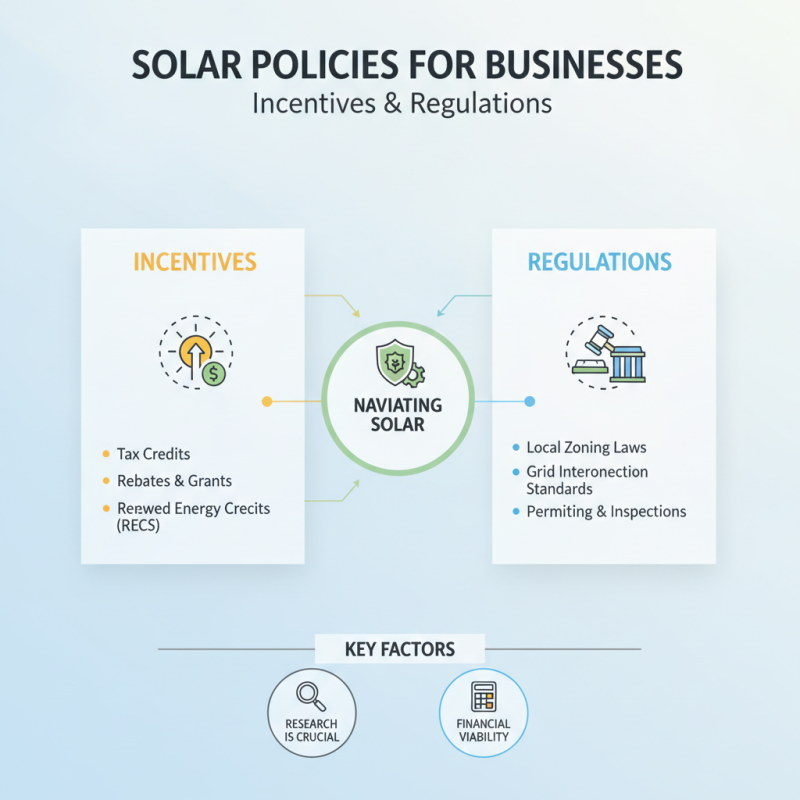
Navigating solar policies can be complex for business owners. Understanding local regulations is crucial. Each state has different guidelines that affect installation, grid access, and incentives. Business owners should prioritize research to identify which policies benefit them the most. This can directly impact the financial viability of solar investments.

Incentives can make solar feasible. Grants, tax credits, and rebates often exist but vary significantly. Engage with local energy agencies to uncover potential support. Additionally, staying informed on changing policies is essential. Laws can shift, impacting how your business might qualify for these programs. Building relationships with local organizations can provide valuable insights into future changes.

Consider your long-term goals. Some businesses rush into decisions without assessing their energy needs thoroughly. A solar system must align with your operational demands. Reflect on how changes in policies might affect your plans. It’s worth taking the time to thoroughly evaluate when making such significant investments.