Eco Energies

What Are the 2026 Best Solar Solutions Worldwide?

What are the 2026 best solar solutions worldwide? The answer depends on climate, electricity prices, grid reliability, and local installation standards. A rooftop system in Arizona faces different demands from one in coastal Norway. Heat, snow, salt air, and limited roof space can change the right design.

This guide examines solar solutions through practical and measurable criteria. We consider panel efficiency, battery safety, inverter performance, repair access, and long-term operating costs. We also look at community solar, agrivoltaics, floating solar, and off-grid systems. Real-world experience matters here. A high-efficiency panel is not automatically the best choice if replacement parts are difficult to source. Reliable installers, clear warranties, certified equipment, and transparent production estimates deserve equal attention.

Small details matter.

For example, a shaded chimney can reduce output across an entire string without proper system planning. A battery may provide valuable evening power, yet poor ventilation or unsuitable temperatures can shorten its service life. We will compare solutions using manufacturer data, independent testing, installation evidence, and regional energy conditions. However, no global ranking can fit every household or business perfectly. Some performance claims also depend on ideal laboratory conditions, not dusty rooftops or aging components.

The strongest choices balance clean generation, resilience, affordability, and maintainability. This overview aims to support informed decisions, not promote one technology blindly. Readers should verify local permits, grid rules, financing terms, and professional assessments before investing. Mistakes remain possible, especially when markets change quickly.
What Are the 2026 Best Solar Solutions Worldwide?

Global Solar Energy Trends Shaping 2026

What Are the 2026 Best Solar Solutions Worldwide?

Global Solar Energy Trends Shaping 2026

Solar decisions in 2026 are becoming more local. High-efficiency modules matter, but climate, roof structure, and grid rules matter more. In hot regions, panels with lower temperature losses can protect output during long summer afternoons. In snowy areas, steeper mounting and durable frames may reduce maintenance. Bifacial systems can capture reflected light from pale ground or rooftops. Their advantage depends on spacing, surface reflectivity, and careful installation.

Storage matters. Hybrid solar systems increasingly pair generation with batteries, smart inverters, and demand controls. This combination can shift daytime electricity into evening cooking, cooling, or small-business operations. In remote communities, solar-plus-storage can reduce diesel dependence, but battery replacement planning is essential. Safety requires certified equipment, proper ventilation, fire protection, and trained technicians. Grid access remains difficult.

Large projects are also changing. Floating solar can conserve scarce land, while agrivoltaics may provide shade for crops and panels. Recycling plans should be written before construction, not after failure. Independent yield estimates, transparent warranties, and local service capacity are stronger evidence than attractive performance claims. Yet no solution is perfect. Batteries use minerals, recycling systems remain uneven, and poorly planned projects can disturb habitats. I would question any forecast that ignores dust, storms, curtailment, or community approval. Real performance should be checked through monitored data across several seasons.

How Solar Technologies Compare Across Regions

What Are the 2026 Best Solar Solutions Worldwide?

How Solar Technologies Compare Across Regions

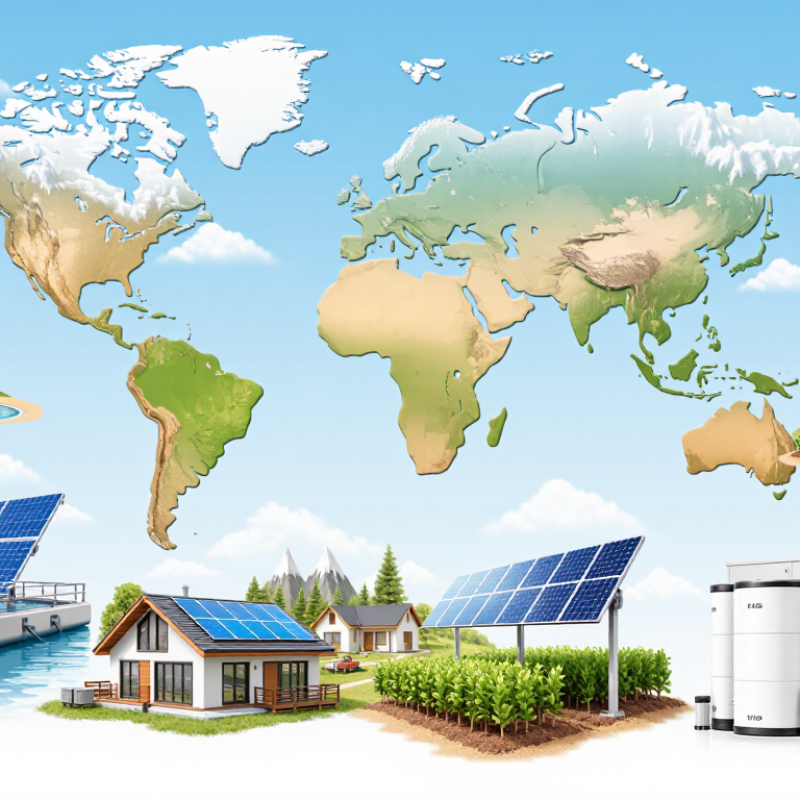
Solar performance depends on climate, land, electricity demand, and grid strength. In sunny, dry regions, large ground-mounted photovoltaic systems can produce power at competitive costs. Bifacial panels work well there, especially over bright sand or pale gravel. However, heat can reduce output, while dust increases cleaning needs. Small design choices matter.

Northern Europe and Canada need different planning. Rooftop solar can perform during long summer days, but snow, low winter sunlight, and steep roof angles affect production. Pairing panels with batteries can improve household reliability. Still, seasonal storage remains expensive and technically demanding. Cloudy weather is not a failure, but forecasts become more important.

Dense Asian cities often favor rooftop systems, building-integrated panels, and shared solar projects. Space is limited, so efficiency and safe installation matter more than panel size. Floating solar can help reservoirs in regions with crowded land and high humidity. In rural Africa and island communities, solar mini-grids may serve clinics, farms, and schools better than distant transmission lines. They need durable equipment and trained local technicians.

Emerging perovskite and tandem cells may increase efficiency by using more sunlight. Their long-term durability is not fully proven at commercial scale. I would not treat laboratory results as field certainty. Regional testing, transparent performance data, and careful maintenance records should guide investment in 2026.

The Best Solar Solutions for Homes, Businesses, and Communities

The best solar solutions in 2026 begin with local conditions, not sales promises. The IEA’s Renewables 2024 report states that global solar photovoltaic additions reached about 420 gigawatts in 2023. That scale matters. It also exposes weak planning.

For homes, rooftop panels work best when paired with efficient appliances and carefully sized batteries. A south-facing roof may produce strong midday output, while evening cooking creates the real energy demand. Smart controls can shift water heating into sunny hours. Yet batteries are not automatically economical. A professional assessment should examine shading, roof age, electricity tariffs, backup needs, and local weather records. Small systems are easier to maintain. They are not always cheaper per unit of electricity.

Businesses need solar designs that protect operations, not just reduce annual bills. Warehouses can combine rooftop generation, battery storage, and demand management for refrigeration or machinery. The IEA’s Batteries and Secure Energy Transitions report says global energy storage capacity must increase sixfold by 2030 in a net-zero pathway. That target highlights storage’s growing role, but it also demands safer installation and realistic replacement planning.

Communities can share solar through schools, clinics, parking areas, and microgrids. IRENA’s Renewable Capacity Statistics 2024 recorded roughly 1,419 gigawatts of global solar capacity by the end of 2023. Strong projects include transparent billing, maintenance funds, and access for lower-income households. No design is perfect. Dust, storms, financing gaps, and poor training still reduce real-world performance.

Key Factors for Choosing a Solar System in 2026

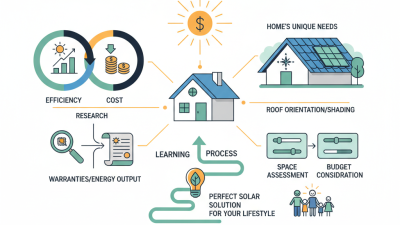
Choosing the best solar system in 2026 requires more than comparing panel efficiency. Start with your home’s sunlight, roof angle, weather, and electricity habits. A shaded roof may need different equipment than a bright, open roof. In hot regions, temperature performance matters. In snowy or coastal areas, durability and certified weather resistance deserve close attention. Ask for a site assessment, not a quick online estimate.

Battery storage is useful where outages or high evening prices are common. Check usable capacity, backup power limits, charging speed, and expected degradation. A larger battery is not always better. The system should match your daily load, such as refrigeration, lighting, and water heating. Review installation credentials, product testing, warranty terms, maintenance support, and local electrical requirements. Independent energy audits can reveal optimistic savings claims.

Tips: Compare total lifetime cost, not only the purchase price. Request at least three detailed proposals. Read the warranty exclusions. Check whether replacement parts remain available. Ask how panels and batteries will be recycled later. Small details matter.

A reliable installer should explain assumptions in plain language. Savings will vary with tariffs, weather, shading, and household behavior. I would also question forecasts showing perfect performance every year. Real systems collect dust, lose output gradually, and sometimes need repairs. That is normal, and honest planning should include it.

What Are the 2026 Best Solar Solutions Worldwide?

Key factors for choosing a solar system in 2026, based on technology performance, project application, cost, reliability, and sustainability.

Solar Solution Best-Fit Application Typical System Size Typical Module Efficiency in 2026 Indicative Annual Yield Storage Compatibility Indicative Global LCOE Key Selection Factors
Residential Rooftop Solar Homes, small buildings, and owner-occupied properties with suitable roof space. 3–15 kW 20–24% 900–1,800 kWh/kW/year Highly compatible with lithium-ion batteries, hybrid inverters, and electric-vehicle charging. Approximately US$60–180/MWh Roof orientation, shading, local electricity prices, export rules, backup needs, roof condition, and installation quality.
Commercial and Industrial Rooftop Solar Factories, warehouses, offices, retail buildings, schools, and hospitals with daytime electricity demand. 50 kW–5 MW 20–24% 950–1,900 kWh/kW/year Suitable for behind-the-meter batteries, demand management, and time-of-use optimization. Approximately US$35–120/MWh Load profile, roof loading capacity, grid connection limits, self-consumption rate, fire safety, and maintenance access.
Utility-Scale Ground-Mounted Solar PV Large-scale electricity generation connected to transmission or distribution networks. 10 MW–1 GW+ 20–24% 1,200–2,400 kWh/kW/year Well suited to co-located four-hour battery storage and grid-scale energy management. Approximately US$25–90/MWh Solar resource, land cost, grid capacity, permitting, curtailment risk, module degradation, financing, and construction schedule.
Solar PV Plus Battery Storage Locations requiring evening energy, backup power, peak-demand reduction, or improved renewable integration. 10 kW–500 MW+ 20–24% Depends on the paired PV system Integrated by definition; common designs provide approximately 2–8 hours of storage duration. PV cost plus approximately US$150–400/MWh of battery-storage energy capacity cost Battery duration, cycling frequency, round-trip efficiency, thermal management, safety standards, degradation, and replacement planning.
Agrivoltaics Farmland where electricity generation is combined with crops, grazing, or protected agricultural production. 100 kW–100 MW 19–23% 900–2,000 kWh/kW/year Compatible with batteries, irrigation controls, agricultural loads, and microgrids. Approximately US$45–140/MWh Crop tolerance to shade, panel height, agricultural machinery access, water availability, land regulation, and dual-use revenue.
Floating Solar PV Reservoirs, quarry lakes, irrigation ponds, and other suitable artificial water bodies. 1 MW–500 MW+ 20–24% 1,100–2,300 kWh/kW/year Suitable for batteries and for hybrid operation with nearby hydropower assets. Approximately US$40–130/MWh Water-level variation, anchoring, wind and wave conditions, water-quality effects, corrosion, access, and ecological permitting.
Building-Integrated Photovoltaics New buildings, façades, skylights, canopies, and architectural projects where PV replaces conventional materials. 5 kW–10 MW 15–22% 500–1,600 kWh/kW/year Can be paired with batteries, smart-building controls, and electric-vehicle charging. Approximately US$100–350/MWh Design integration, orientation, shading, construction cost, electrical certification, replaceability, fire performance, and façade maintenance.
Off-Grid Solar Microgrid Remote homes, islands, telecommunications sites, clinics, schools, mines, and rural communities without reliable grid access. 1 kW–10 MW 19–24% 700–2,000 kWh/kW/year Requires storage sized for the local load profile; may include backup generation or demand-response controls. Approximately US$100–450/MWh Critical-load requirements, battery autonomy, seasonal solar variation, spare parts, local technical skills, security, and long-term service.
Solar Thermal Water Heating Residential, commercial, hotel, healthcare, and industrial hot-water demand. 2–1,000 m² of collector area 40–70% useful thermal efficiency 300–900 kWh-thermal/m²/year Uses insulated hot-water storage rather than electrical battery storage; can be combined with heat pumps. Approximately US$20–100/MWh-thermal Hot-water demand, climate, collector orientation, storage volume, freeze protection, water quality, and maintenance requirements.

Data note: Values are indicative global ranges for 2026 planning and comparison, not guaranteed project results. Actual performance and cost depend on solar irradiation, temperature, system design, labor, financing, land, grid conditions, local regulations, exchange rates, and operating practices. Typical PV module efficiency ranges reflect commercially available crystalline-silicon technology; annual yield varies substantially by location and system orientation. Cost ranges are expressed in 2026 US dollars and should be validated through a site-specific feasibility study.

Future Developments in Worldwide Solar Energy Adoption

What Are the 2026 Best Solar Solutions Worldwide?

Future solar adoption will depend on more than installing additional panels. In 2026, practical systems will combine rooftop generation, battery storage, smart inverters, and flexible electricity demand. Rural clinics may use solar mini-grids to power vaccine refrigerators and water pumps. In dense cities, lightweight panels can serve balconies, façades, and parking structures.

Field experience shows that local design matters. A dusty village needs simple cleaning access and durable mounting. A coastal project needs corrosion-resistant materials and stronger wind protection. Energy planners should study sunlight, rainfall, grid reliability, land use, and household income before selecting equipment. Poorly matched systems can perform badly, even under excellent sunshine.

Storage will become more important as solar production changes throughout the day. Batteries can shift midday electricity toward evening cooking, cooling, and transport. However, batteries require careful fire protection, responsible recycling, and transparent performance data. Grid upgrades will also determine whether new solar capacity delivers real benefits. Some regions may progress quickly, while others face financing gaps, weak transmission networks, or limited technical training.

The transition is not perfectly smooth. Solar panels still require minerals, land, maintenance, and end-of-life planning. That deserves more attention. Reliable adoption will come from measurable efficiency, independent testing, skilled local workers, and policies that protect consumers without slowing innovation.