Choosing the right solar technology is no longer a simple matter of buying panels. Global buyers must examine sunlight levels, grid reliability, roof structure, local regulations, and long-term maintenance. A system that performs beautifully in Arizona may struggle during cloudy winters in northern Europe. Context matters.
This guide introduces ten practical solar technology solutions for homes, farms, businesses, and remote communities. They include high-efficiency photovoltaic panels, hybrid inverters, battery storage, solar water heaters, solar pumps, tracking systems, microgrids, smart monitoring, agrivoltaics, and building-integrated photovoltaics. Each option offers different benefits, costs, and installation requirements. None is perfect.
Fatih Birol, Executive Director of the International Energy Agency, has described solar PV as “the new king of global electricity markets.” His observation reflects falling costs and rapidly expanding deployment, but buyers still need careful judgment. Product quality varies. Installer expertise varies more. Certification, tested performance data, warranty terms, fire safety, recycling plans, and available technical support should influence every decision. A low purchase price can become expensive when batteries degrade early or replacement parts are unavailable.
This overview follows an experience-based approach. It considers real operating conditions, not only impressive laboratory ratings. It also recognizes uncertainty. Energy demand may change, policies may shift, and weather can be unpredictable. The strongest solution is usually the one that remains dependable after installation, not the one with the most attractive brochure.
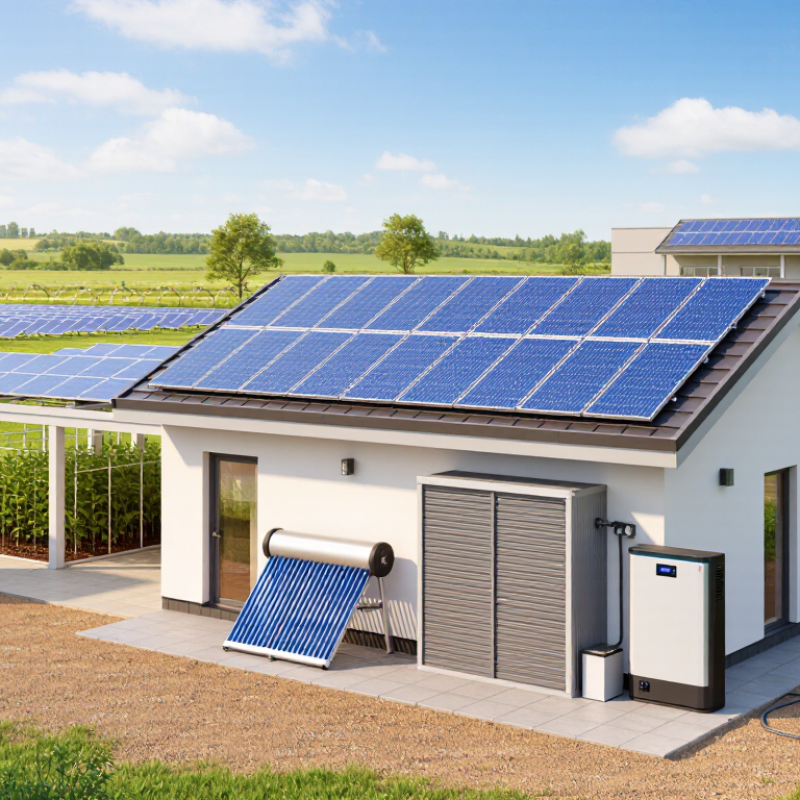
A high-performance solar technology solution is not defined by panel efficiency alone. It must deliver stable energy under heat, dust, humidity, and partial shading. Site design matters as much as hardware. A system producing more electricity per square meter may still fail if maintenance access is poor.
IRENA’s Renewable Capacity Statistics 2024 reports 473 GW of renewable capacity added globally in 2023. Solar represented about 346 GW, or nearly 73% of that growth. This rapid expansion raises a practical question: can each system perform reliably for decades?
NREL research commonly estimates crystalline silicon module degradation near 0.5% annually. Buyers should examine temperature coefficients, degradation guarantees, inverter life, battery cycling, and monitoring quality.
Safety testing and documented installation experience also matter. A cheap system can become expensive when faults remain invisible.
Tips: Request hourly production estimates, not only annual totals. Compare results under local weather conditions. Check cleaning access and replacement plans. Ask for independent test data. Do not trust efficiency figures alone.
Field experience shows that high performance is partly operational. Sensors should identify abnormal output before revenue is lost. Clear maintenance records build trust. Yet no design is perfect.
Dust patterns, grid interruptions, and user behavior can weaken forecasts. A careful buyer should leave financial and technical room for these surprises.
IEA’s Renewables 2024 analysis also highlights the importance of grid flexibility as solar deployment expands. A powerful system without suitable grid coordination may produce less value than expected.
10 Best Solar Technology Solutions for Global Buyers?
How to Evaluate Solar Technologies for Different Global Markets
Global buyers should evaluate solar technology against local conditions, not efficiency ratings alone. IRENA’s Renewable Capacity Statistics 2025 reports 585 gigawatts of renewable capacity added in 2024. Solar contributed approximately 452 gigawatts. This scale creates more choices, but also greater evaluation pressure.
Start with the site. Compare annual irradiance, heat, humidity, dust, wind, and available roof space. High temperatures can reduce module output. Dusty regions may require stronger cleaning plans and suitable mounting angles. The IEA PVPS Trends 2024 report recorded global photovoltaic capacity above 1.4 terawatts in 2023. That figure shows market maturity, not universal suitability.
Grid conditions matter equally. Examine voltage stability, outage frequency, export limits, and connection costs. In remote markets, hybrid systems with storage may provide better value than oversized solar arrays. Check round-trip efficiency, battery temperature limits, replacement access, and fire-safety documentation. Certification should match the destination market’s electrical and structural requirements.
I would not choose technology from a laboratory number alone. A slightly lower-efficiency module may perform better under heat and partial shading. That judgment requires measured field data. Review independent testing, degradation warranties, spare-part availability, and installer experience. The World Bank’s Global Solar Atlas can support initial resource screening, but on-site measurements remain valuable. Forecasts can be wrong. Local evidence should decide.
| Solar Technology Solution | Typical Module Efficiency | Best-Fit Global Markets | Main Advantages | Important Limitations | Key Evaluation Criteria | Technology Maturity |
|---|---|---|---|---|---|---|
| Monocrystalline PERC | Approximately 19%–22% | Residential and commercial markets with limited roof area; temperate, tropical, and dry climates | Mature supply chain, strong energy yield, broad installer experience, and competitive total cost | Lower long-term performance potential than newer cell architectures; performance can decline under high heat | Temperature coefficient, warranty terms, degradation rate, local availability, and certification requirements | Very high |
| N-Type TOPCon | Approximately 21%–23.5% | Utility-scale, commercial, and high-performance residential projects in high-irradiance or hot regions | Higher efficiency, lower degradation, and generally better temperature performance than older p-type designs | May require stricter quality control and careful compatibility checks with inverters and mounting systems | Bifacial gain, temperature coefficient, first-year degradation, mechanical load rating, and bankability evidence | High |
| Heterojunction (HJT) | Approximately 21%–24% | Hot climates, premium rooftop projects, and sites where energy yield per square meter is critical | Excellent temperature behavior, strong low-light response, high bifacial potential, and low degradation | Higher manufacturing complexity and potentially higher upfront system cost | Thermal performance, bifaciality, installation handling, project economics, and availability of qualified service support | High |
| Back-Contact Silicon | Approximately 22%–24.5% | Space-constrained residential and commercial rooftops in markets that value maximum output and appearance | Very high efficiency, clean front surface, and strong power density | Usually carries a premium price and may have a narrower installer and service network | Cost per watt, roof geometry, shade response, product warranty, and availability of replacement modules | High |
| Bifacial Solar Modules | Front-side efficiency commonly about 20%–23.5% | Utility-scale and commercial projects with reflective ground, elevated structures, or high-albedo surfaces | Can generate additional rear-side energy and improve output without increasing the site footprint | Actual gain depends heavily on ground reflectivity, row spacing, mounting height, and rear-side shading | Expected bifacial gain, albedo, tracker or fixed-tilt design, rear shading, and energy-model assumptions | High |
| Thin-Film Solar Modules | Approximately 10%–19%, depending on material and design | Large land-based installations, lightweight structures, and some hot or diffuse-light environments | Lightweight options, good performance in diffuse light, and potentially favorable high-temperature behavior | Lower power density requires more area; material-specific recycling and degradation considerations may apply | Land availability, lifecycle assessment, temperature coefficient, moisture protection, and end-of-life handling | Medium to high |
| Building-Integrated Photovoltaics (BIPV) | Approximately 10%–20%, depending on the building element | Dense cities, new construction, architectural projects, façades, skylights, and solar roofing applications | Combines building materials with power generation and can reduce separate façade or roofing material requirements | Higher design complexity, specialized installation, permitting requirements, and more difficult maintenance access | Building codes, fire safety, waterproofing, structural integration, maintenance access, and energy yield | Medium |
| Floating Solar Photovoltaics | Approximately 19%–23.5% | Water-stressed regions, reservoirs, industrial ponds, and areas with limited suitable land | Uses water surfaces, may reduce water evaporation, and can benefit from module cooling | Wave action, corrosion, anchoring, access, water ecology, and electrical safety create additional project risks | Water level variation, wind and wave loads, mooring design, corrosion resistance, environmental permits, and O&M access | Medium to high |
| Solar Tracking Systems | Used with modules typically rated at about 19%–24% | High-direct-normal-irradiance utility projects, especially in dry and open regions | Can increase daily energy production and extend generation into morning and afternoon periods | Higher capital, maintenance, land, and wind-load requirements than fixed-tilt structures | Direct-normal irradiance, wind conditions, terrain, tracker availability, maintenance capability, and energy-price profile | High |
| Solar-Plus-Storage Systems | Solar modules typically about 19%–24%; storage round-trip efficiency commonly about 80%–95% | Regions with weak grids, time-of-use tariffs, frequent outages, or high demand for energy independence | Improves self-consumption, provides backup power, supports peak shifting, and can reduce grid dependence | Higher upfront cost, battery degradation, thermal management needs, and additional safety requirements | Load profile, outage frequency, battery chemistry, usable capacity, cycle life, fire safety, tariff structure, and recycling plan | High |
Note: Efficiency and performance figures are typical market ranges rather than guaranteed values. Actual results depend on module design, climate, orientation, shading, system losses, installation quality, operating temperature, and local regulations.
Solar panels now serve rooftops, farms, factories, and remote facilities. Global buyers should compare more than rated wattage. Module design, temperature performance, warranty terms, and local installation skills can change lifetime value.
IRENA’s Renewable Capacity Statistics 2024 reported 1,419 GW of global solar capacity by the end of 2023. This rapid expansion increases pressure on supply chains, recycling systems, and quality control. For buyers, high-efficiency modules can reduce roof space, but they may cost more. Bifacial modules can produce extra energy from reflected light, especially above bright surfaces. Results vary. Dust, shading, mounting height, and weather matter.
Building-integrated photovoltaics, or BIPV, replace parts of a building envelope. Solar glass can become a facade, canopy, skylight, or balcony screen. The IEA PVPS Task 15 report identifies BIPV as a route toward stronger architectural integration, but installation requires cooperation between engineers, architects, and electricians. It is not simply a panel with a different frame. Heat management, waterproofing, fire performance, and maintenance access need early review. Some designs look impressive but remain difficult to repair.
Tips: Request independent test data, not only brochures. Check annual yield estimates for the exact site. Compare degradation assumptions over 25 years. Ask who replaces damaged glass or wiring. Inspect sample modules under real lighting. A small pilot roof can reveal problems before a large purchase. Do not assume the most attractive facade produces the most energy.
10 Best Solar Technology Solutions for Global Buyers?
Energy storage, inverters, and smart solar management now define reliable solar systems. The IEA reported about 375 GW of solar PV additions in 2023, increasing pressure on grids and equipment. Storage helps shift midday generation into evening demand. BloombergNEF recorded a 20% fall in lithium-ion battery pack prices during 2024, reaching about $115 per kWh. Lower prices help, but thermal control and warranty conditions still matter.
Modern inverters must manage voltage, frequency, backup loads, and changing grid rules. A high-efficiency unit is not enough. During commissioning, installers should test shutdown behavior, communication loss, and battery response under partial loads. Smart management platforms can forecast production, monitor state of charge, and reduce unnecessary grid imports. The IEA’s Electricity 2024 report expects global electricity demand to grow strongly through 2026, making flexible control more valuable. Yet software settings are often treated as an afterthought. That assumption is costly.
Tips: Match battery capacity with evening consumption, not panel size alone. Check round-trip efficiency, usable capacity, operating temperature, and local service capability. Keep five-minute interval data for performance reviews. Ask for independent safety testing. Do not trust perfect simulations; real roofs have shade, dust, and uneven loads. A small pilot system may reveal problems earlier.
Global buyers should match solar equipment to local sunlight, weather, grid quality, and maintenance skills. The strongest solutions often combine photovoltaic modules, efficient inverters, battery storage, smart monitoring, and durable mounting systems. Other useful options include solar water pumps, heating systems, off-grid microgrids, portable units, and electric vehicle charging stations.
Start with a documented site assessment. Measure roof direction, shading, wind exposure, soil strength, and daily electricity demand. Ask suppliers for verified performance data, warranty terms, replacement procedures, and safety certificates. Local technicians should understand electrical codes and emergency shutdown requirements. A low purchase price can become expensive when spare parts travel across oceans.
Installation quality matters greatly. Loose wiring, poor drainage, and incorrect battery ventilation can reduce performance or create serious hazards. Use corrosion-resistant hardware near coastlines. In dusty regions, schedule panel cleaning according to actual soiling, not guesswork. Monitoring software can reveal declining output, unusual temperatures, or battery stress before failure occurs. However, remote data is not perfect. Sensors sometimes drift, and owners may ignore warnings. Keep a simple inspection log, check connections periodically, and train at least one local operator. Solar projects succeed through disciplined care, not equipment alone.