What Is the Best Solar Technology in China? The answer depends on location, building design, energy demand, and grid conditions. China’s solar market includes monocrystalline silicon panels, TOPCon cells, heterojunction technology, thin-film modules, floating solar, and building-integrated photovoltaics. Each option solves a different problem.
Efficiency matters, but it is not the whole story. A high-efficiency panel may produce more electricity from a small Shanghai rooftop. However, a lower-cost module could offer better value on a large industrial roof in Jiangsu. In western China, intense sunlight and open land favor utility-scale projects. Dust, temperature changes, snow, and transmission distance still affect real-world performance. Small details matter.
Professor Martin Green, a leading solar-cell researcher at UNSW Sydney, has said, “Solar photovoltaics is now the lowest-cost electricity generation technology in most parts of the world.” His view reflects solar technology’s rapid progress, but it should not end the discussion. Lower generation costs do not automatically guarantee reliable power. Storage, inverters, maintenance, recycling, and grid access remain essential.
This guide compares China’s leading solar technologies through efficiency, durability, cost, installation conditions, and long-term performance. It also considers practical experience from rooftops and large solar farms. There is no perfect panel. That is worth admitting. A technology that performs well in a dry desert may disappoint under coastal humidity or heavy winter pollution. The best choice is usually the one that balances measurable output with local conditions, trusted certification, and dependable after-sales support.
Solar technology in China covers more than panels on rooftops. It includes materials, cell design, manufacturing, power electronics, storage, installation, monitoring, and recycling. The main commercial foundation remains crystalline-silicon photovoltaics, valued for mature production and dependable field performance. Thin-film systems serve selected projects, especially where weight or unusual surfaces matter. Perovskite and tandem cells show strong laboratory potential, but long-term outdoor evidence is still developing.
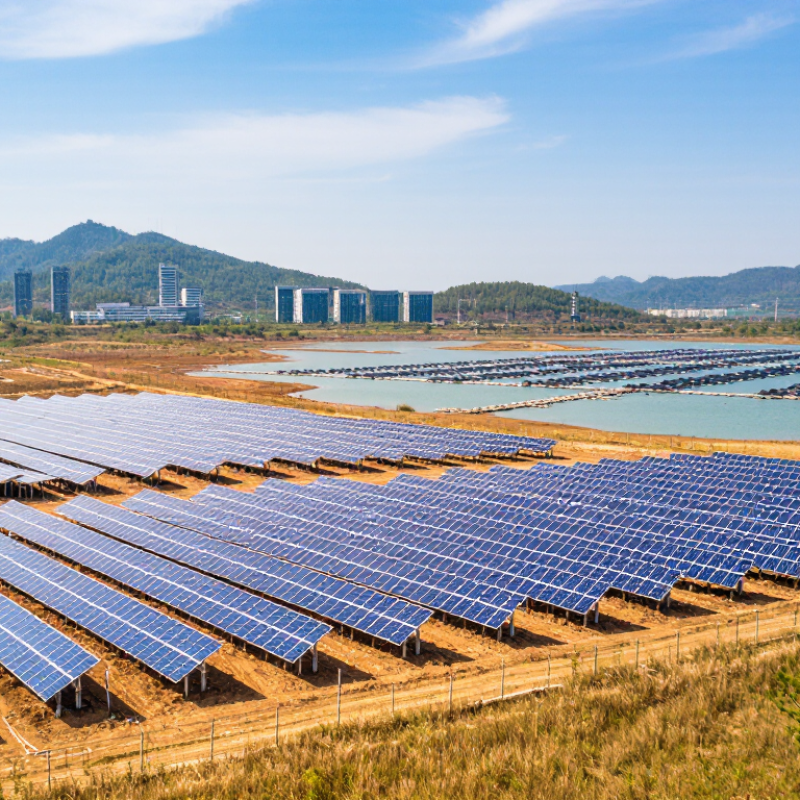
The scope also includes where solar power operates. Large ground-mounted plants, factory roofs, village courtyards, floating arrays, and agricultural sites create different technical demands. A hot, dusty region may reward modules with low temperature loss and easy cleaning. A crowded urban roof may need lightweight equipment and careful fire design. In practice, the best technology is not always the one with the highest laboratory efficiency. Energy yield, degradation, land use, grid connection, maintenance access, and end-of-life handling deserve equal attention.
Reliable evaluation requires independent testing, transparent production data, and performance records from several seasons. International electrical standards can support safer comparisons, while local weather and grid conditions remain decisive. I have seen efficiency figures appear impressive until heat, dust, shading, or weak maintenance reduced actual output. That gap matters. Perovskite products may eventually change the market, yet durability questions remain. Even established silicon systems are not perfect; recycling capacity, supply-chain impacts, and power curtailment still need more honest measurement.
What Is the Best Solar Technology in China?
China’s solar market is built mainly on crystalline-silicon photovoltaic cells. A silicon wafer absorbs sunlight and releases electrons. The cell’s p-n junction directs this flow into an electric circuit. An inverter then converts direct current into grid-compatible alternating current.
Monocrystalline cells remain widely used because they offer high efficiency in limited roof space. PERC technology adds a rear passivation layer, improving light capture. However, n-type designs are gaining ground. TOPCon adds a thin tunnel oxide and conductive layer, reducing electrical losses. HJT combines crystalline silicon with thin semiconductor layers, supporting strong performance in hot conditions. Back-contact cells move electrical contacts behind the cell, leaving more active surface exposed.
China added about 277 gigawatts of solar capacity in 2024, according to the National Energy Administration. That rapid expansion is changing manufacturing priorities. The International Technology Roadmap for Photovoltaics reported continued movement toward n-type wafers and higher-efficiency cell structures in its 2024 edition. IEA PVPS recorded China’s cumulative photovoltaic capacity at roughly 609 gigawatts by the end of 2023.
Thin-film modules use semiconductor layers deposited on glass or flexible materials. They can perform better in weak light, but their market share remains smaller. Efficiency figures can mislead. Laboratory ratings are not rooftop results. Heat, dust, shading, and inverter losses matter. A neat ranking is tempting, but it can be wrong. For many Chinese projects, TOPCon offers a practical balance between efficiency, cost, and manufacturing scale. HJT may suit high-temperature sites, though its production complexity still deserves careful scrutiny.
China offers several solar technology options, and their differences matter more than their labels. Monocrystalline silicon remains the practical choice for many rooftops and utility projects. It provides strong efficiency in limited space. TOPCon cells usually improve energy output and reduce long-term losses. Heterojunction cells can perform well during hot conditions. Their manufacturing process, however, may require tighter quality control and higher project budgets.
Thin-film modules can suit lightweight roofs, curved surfaces, or buildings with unusual structures. They often tolerate weak light better, but they generally need more installation area. Perovskite technology is promising because it may achieve high efficiency with lighter materials. Yet outdoor durability still needs longer field verification. Laboratory results can look impressive. Real weather is less forgiving.
Site conditions should guide the decision. A dusty roof near a factory needs reliable cleaning access and stable temperature performance. A northern project may value low-light output during winter mornings. Coastal installations require careful corrosion protection. In project reviews, I would compare power density, degradation warranties, fire safety, recycling plans, and maintenance records. The cheapest module is not always the lowest-cost system.
Small details matter. A few percentage points of efficiency may justify a higher price on a crowded roof. They may not matter on inexpensive open land. My own assessment could change after checking shading, grid limits, and local labor costs. No option is perfect.
What Is the Best Solar Technology in China?
The best solar technology depends on the project, not laboratory efficiency alone. China added 277.17 GW of solar capacity in 2024, according to the National Energy Administration. Its total capacity reached about 887 GW. This scale makes field reliability more important than impressive brochures.
Evaluate module efficiency, annual degradation, temperature coefficient, and performance in weak light. Bifacial modules can improve output on reflective roofs or bright ground surfaces. However, dusty industrial roofs may reduce this advantage. Check real operating data from comparable sites. IEA PVPS reported strong global solar growth in 2023, but performance still varies by climate and installation quality. A useful evaluation also includes inverter efficiency, monitoring accuracy, fire safety, recycling plans, and grid compatibility. Levelized cost of electricity matters more than the lowest purchase price. I sometimes overvalue efficiency. That is a mistake.
Tips: Compare at least three years of measured output. Test under high heat, dust, and partial shading. Request independent certification and degradation evidence. Study local wind and snow loads. Calculate maintenance visits, not only installation costs. IRENA’s Renewable Capacity Statistics 2025 confirms China’s exceptional solar expansion, yet rapid deployment can expose weaknesses in design, inspection, and after-sales support. A careful buyer should question optimistic forecasts and leave room for uncertain weather, curtailment, and future recycling costs.
| Evaluation Dimension | PERC Silicon | TOPCon Silicon | HJT Silicon | Back-Contact Silicon | Thin-Film and Tandem Technologies |
|---|---|---|---|---|---|
| Technology type | Passivated emitter and rear cell using crystalline silicon | Tunnel-oxide passivated contact using crystalline silicon | Heterojunction structure combining crystalline silicon and thin amorphous-silicon layers | Contacts placed mainly on the rear side of the cell to reduce front-side shading | Includes cadmium telluride, copper indium gallium diselenide, perovskite, and perovskite-silicon tandem structures |
| Typical commercial module efficiency | Approximately 20%–22% | Approximately 22%–24% | Approximately 22%–24% | Approximately 22%–24.5% | Thin-film modules commonly about 17%–20%; tandem products remain less standardized and are mainly emerging |
| Commercial maturity in China | Mature, but its market share has been declining as newer silicon architectures expand | High and rapidly expanding; widely considered a mainstream high-volume technology | Commercially established, with a smaller production base than TOPCon | Commercially available, but production volume and supply options vary | Thin film is established in selected applications; perovskite and tandem technologies are still moving from pilot production toward wider commercialization |
| Temperature coefficient | Usually about −0.34% to −0.40% per °C | Usually about −0.29% to −0.35% per °C | Usually about −0.24% to −0.30% per °C | Usually about −0.28% to −0.35% per °C | Varies substantially by material and device design; thin-film technologies can perform well in hot conditions |
| Bifacial capability | Available; typical bifaciality is about 65%–75% | Available; typical bifaciality is about 75%–85% | Available; typical bifaciality is about 85%–95% | Depends on the rear-contact design; many products are optimized mainly for front-side output | Generally less suited to conventional bifacial applications, although designs vary |
| Energy yield in hot climates | Good, but output decreases more with heat than with lower-temperature-coefficient designs | Very good for most utility-scale and distributed-generation projects | Excellent temperature performance and strong low-light response | Very good where roof area is limited and high output per square meter is important | Often good in high-temperature environments, but project-level yield depends strongly on the specific material and module design |
| Manufacturing complexity | Relatively low compared with newer architectures | Moderate; compatible with much of the existing crystalline-silicon production infrastructure | High; requires additional thin-film deposition and strict process control | High; rear-side processing and metallization require specialized equipment | Ranges from established thin-film manufacturing to highly complex emerging tandem processes |
| Long-term reliability evidence | The longest field history among the listed technologies | Strong and growing field evidence; long-term data should still be checked by product and installation site | Good reliability potential, supported by a stable structure, but project data are less extensive than for PERC | Promising, but reliability depends on encapsulation, interconnection, and rear-contact design | Thin film has established reliability data; perovskite durability and large-scale field evidence remain key challenges |
| Best use case | Budget-sensitive projects where proven supply and established installation practices are priorities | A balanced choice for large-scale solar farms, commercial rooftops, and most projects in China | Hot climates, high-performance projects, and sites where low temperature losses and low-light response matter | Space-constrained rooftops and projects requiring high power density | Specialized applications, lightweight structures, selected hot-climate sites, and future high-efficiency projects |
| Key risks to evaluate | Lower efficiency ceiling and possible limitations in future supply availability | Rapid technology changes, product differentiation, and the need to verify degradation and warranty terms | Higher manufacturing cost, process complexity, and supply-chain scale | Higher cost, more specialized manufacturing, and potentially fewer compatible suppliers | Limited long-term field data for emerging technologies, manufacturing scale-up, degradation, and recycling requirements |
| Overall suitability for China today | Suitable but generally not the leading choice for new high-efficiency projects | Best all-round option for many projects because it combines high efficiency, scalable manufacturing, and broad availability | One of the strongest premium options when energy yield and temperature performance justify additional cost | Excellent for limited-area sites, but not always the lowest-cost solution | Important future options, but generally not the default choice for large-scale deployment today |
Evaluation note: The “best” solar technology depends on total cost of ownership, local solar conditions, available roof or land area, financing, grid constraints, degradation, warranty coverage, installation quality, and end-of-life requirements. Efficiency and temperature-coefficient ranges are typical industry ranges and may vary by cell design, module format, test conditions, and production year.
China’s solar industry is moving beyond the simple race for cheaper silicon panels. New designs now target efficiency, land use, storage, and grid stability. Perovskite-silicon tandem cells are a leading example. They stack a light-absorbing perovskite layer above a conventional silicon cell. This structure can capture more sunlight from the same rooftop. Laboratory results are impressive. Manufacturing durability remains less certain. Heat, moisture, and ultraviolet exposure can weaken delicate layers.
Large-scale projects are also becoming more site-specific. Floating solar arrays use reservoirs near hydropower facilities, reducing pressure on farmland. Panels can shade water, but maintenance crews must monitor anchors, algae, and changing wind loads. Solar agriculture offers another path. Elevated panels leave room for crops, irrigation lines, and farm machinery. Results vary by crop and climate. That detail is often missing from optimistic project forecasts. Field engineers increasingly combine solar generation with batteries, flexible inverters, and weather forecasting. These tools help balance sudden cloud cover and evening demand.
China’s strongest innovation may be this system-level approach. A high-efficiency panel is valuable, but it cannot solve curtailment alone. Grid congestion, recycling capacity, and mineral use still deserve harder scrutiny. Some projections appear too confident. Independent testing, transparent degradation data, and safer end-of-life recovery will separate durable progress from short-lived excitement. That standard is demanding. On working sites, technicians still track dust, heat, repairs, and lost output month after month.
China’s solar industry has expanded rapidly, with cumulative photovoltaic capacity rising from 43.2 GW in 2015 to approximately 887 GW in 2024. This growth reflects large-scale deployment of crystalline-silicon technologies, while TOPCon, heterojunction, perovskite tandem cells, and smart solar systems continue to improve efficiency and energy yield.