
2026 Top Home Energy Management System Types
In 2026, household energy management is moving beyond a wall-mounted thermostat. A home energy management system can coordinate solar panels, batteries, heat pumps, smart plugs, electric vehicles, and utility signals. The goal is practical: reduce waste, control peak demand, and maintain comfort. In a real home, this may mean charging an electric vehicle at 2 a.m., lowering water-heater demand before expensive hours, and storing midday solar for evening cooking. Small actions become measurable when connected through one control platform.
The International Energy Agency’s Energy Efficiency 2024 report identifies buildings as responsible for roughly 30% of global final energy consumption. Its Electricity 2024 analysis also highlights rising electricity demand from cooling, heating, transport, and digital equipment. These trends make residential energy coordination more important. The U.S. Department of Energy’s grid-interactive efficient buildings research further shows how connected equipment can support grid flexibility. ENERGY STAR guidance also indicates that certified smart thermostats can reduce heating and cooling costs when installed and configured correctly. Results still depend on climate, equipment quality, household behavior, and electricity tariffs.
This guide examines the leading home energy management system types expected to shape 2026. These include device-based systems, cloud platforms, solar-and-storage controllers, utility-linked systems, and integrated smart-home solutions. The boundaries remain imperfect. Some products promise automation but offer limited interoperability. Others collect detailed household data without making control settings easy to understand. Reliable evaluation therefore requires more than comparing features. It requires checking measured savings, cybersecurity practices, compatibility, installation experience, and long-term support. The best system is not always the most advanced one. It is the system that works consistently in an actual home.
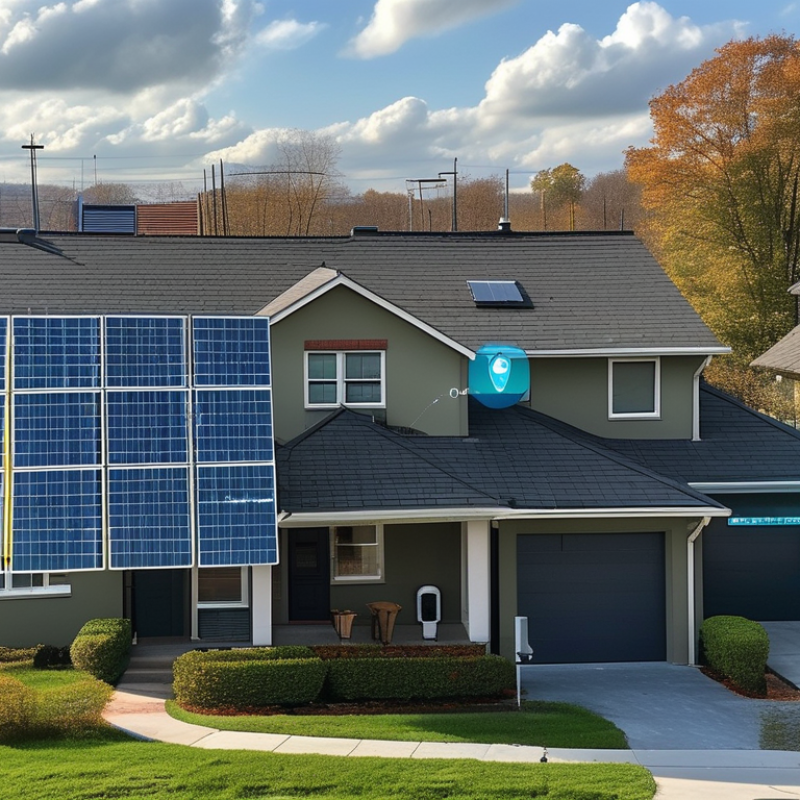
2026 HEMS Scope: IEA Says Buildings Use About 30% of Global Final Energy
2026 Top Home Energy Management System Types
The International Energy Agency reports that buildings use about 30% of global final energy. This figure defines HEMS as more than a comfort tool. It places household control inside the larger efficiency challenge.
A practical HEMS usually falls into several types. Rule-based systems adjust heating, cooling, lighting, and water heating through fixed schedules. Data-driven systems learn occupancy, weather, and hourly prices. Predictive systems forecast demand before a heat pump starts. Integrated systems coordinate rooftop solar, batteries, electric vehicles, and flexible appliances.
The IEA’s Energy Efficiency 2023 analysis shows that efficiency improvements remain essential for reducing energy demand. Meanwhile, the UNEP Global Status Report for Buildings and Construction 2024 says buildings and construction consumed 32% of global energy in 2023. These figures support broader HEMS deployment, especially where electricity networks face evening peaks.
A kitchen meter can reveal a surprising load. An electric oven, water heater, and charger may operate together after 6 p.m. A capable HEMS can shift one task without affecting comfort.
Not every system delivers the advertised savings. Home layouts differ. Sensors fail. Residents override schedules.
That matters.
Reliable HEMS evaluation should compare measured consumption before and after installation. It should also disclose weather, occupancy, tariff, and equipment changes. The U.S. Department of Energy’s connected-device research highlights interoperability and cybersecurity as practical requirements, not optional features. A technically advanced system still underperforms when data is incomplete or controls are confusing.
| HEMS Type | Primary Control Method | Main Energy Assets Managed | Typical Data Inputs | Core Energy Function | Best-Fit Residential Setting | 2026 Relevance |
|---|---|---|---|---|---|---|
| Rule-Based HEMS | Predefined schedules, thresholds and if-then control rules. | HVAC, lighting, water heating, appliances and smart plugs. | Room temperature, occupancy status, electricity consumption, time schedules and tariff periods. | Basic energy monitoring, automatic shut-off, scheduling and peak-load reduction. | Existing homes seeking a simple and comparatively low-complexity energy upgrade. | Mature foundation |
| Monitoring-Centric HEMS | Real-time measurement with dashboards, alerts and appliance-level analysis. | Whole-home electrical panel, circuits, meters and selected appliances. | Voltage, current, power, energy consumption, circuit status and historical load profiles. | Identifies waste, standby consumption, abnormal loads and high-consumption periods. | Households that need visibility before investing in automation or equipment upgrades. | High accessibility |
| AI- and Forecast-Based HEMS | Machine-learning forecasts and adaptive optimization based on household behavior. | HVAC, heat pumps, water heaters, batteries, solar generation and flexible appliances. | Weather forecasts, occupancy patterns, historical demand, electricity prices and renewable output forecasts. | Reduces unnecessary operation while balancing comfort, cost and expected energy availability. | Homes with variable occupancy, dynamic tariffs or multiple controllable devices. | Fast-growing capability |
| Demand-Response HEMS | Automatically shifts or temporarily reduces electricity demand in response to grid signals. | HVAC, water heating, pool pumps, batteries, EV charging and other flexible loads. | Utility or aggregator signals, time-of-use prices, grid conditions, load limits and customer preferences. | Load shifting, peak clipping and participation in demand-response programs without sacrificing essential services. | Homes located in markets with time-varying tariffs or formal demand-response programs. | Grid-flexibility priority |
| Solar- and Battery-Integrated HEMS | Coordinated control of on-site generation, storage and household demand. | Solar photovoltaic systems, home batteries, inverters, HVAC, water heating and appliances. | Solar production, battery state of charge, household demand, export limits, tariffs and weather forecasts. | Self-consumption optimization, backup-power preparation, peak reduction and export management. | Homes with rooftop solar, battery storage or limited grid-export capacity. | High-growth segment |
| EV-Integrated HEMS | Scheduled or optimized electric-vehicle charging according to mobility needs and grid conditions. | EV charger, electric vehicle, solar generation, battery storage and household loads. | Vehicle departure time, required state of charge, charging power, tariffs and renewable generation. | Controls charging cost and demand peaks; may support bidirectional energy flows where compatible equipment and regulations allow. | Households with an electric vehicle and predictable or flexible charging schedules. | Emerging flexibility area |
| Heat-Pump and Thermal-Load HEMS | Preheating, precooling and water-heating optimization within comfort limits. | Heat pumps, electric resistance water heaters, thermal storage, thermostats and circulation pumps. | Indoor temperature, outdoor temperature, humidity, occupancy, thermal inertia, tariffs and weather forecasts. | Moves electricity use away from expensive or high-demand periods while maintaining indoor comfort. | Electrified homes where space heating and water heating represent major energy loads. | Electrification enabler |
| Whole-Home Integrated HEMS | Multi-objective optimization across comfort, cost, emissions, resilience and grid flexibility. | HVAC, heat pumps, solar, batteries, EVs, water heaters, appliances, lighting and smart meters. | Energy consumption, device status, weather, occupancy, tariffs, carbon-intensity signals and backup requirements. | Coordinates the complete household energy system rather than optimizing individual devices separately. | New or upgraded homes with several connected energy assets and a reliable home network. | Most comprehensive architecture |
Related Posts
-
How to Choose the Best Eco Energy Solutions for Your Business?
-
Unlocking the Future of Home Energy with Solar Panel Innovation
-
What is the Best Solar Panel for Business Use in 2023
-
2026 Top Solar Solutions for Global Buyers
-
Top Home Energy Management System Tips to Save Money and Reduce Consumption
-
How to Maximize Your Savings: The Ultimate Guide to Solar Panel Energy Efficiency