Why Is Hybrid Bus AC Important?
Hybrid Bus Ac is more than a comfort feature. It affects how passengers experience every trip and how a hybrid bus uses its energy. In a crowded vehicle, warm air, humidity, and frequent door openings can quickly make the cabin uncomfortable. On a hot afternoon, cooling must recover fast. In cold weather, ventilation and window defogging also matter. That matters.
Unlike a conventional bus, a hybrid bus manages energy across more than one power source. Air-conditioning demand can influence engine operation, electrical load, and, depending on the system design, battery use. The exact effect varies by vehicle, route, climate, and control strategy, so a single fuel-saving claim would be misleading. Still, efficient cooling can support a better balance between passenger comfort and energy consumption. Not just comfort.
The details are practical. A clean filter, correctly charged refrigerant circuit, sound door seals, and well-calibrated controls can help the system perform as intended. Fleet teams should also consider passenger numbers, stop frequency, and outdoor temperature when reviewing performance. Small details count. Yet maintenance alone cannot fix every design or operating issue. That is worth remembering. Understanding why Hybrid Bus Ac is important helps operators, technicians, and buyers ask better questions about comfort, reliability, and energy use—without assuming every hybrid bus behaves the same way.
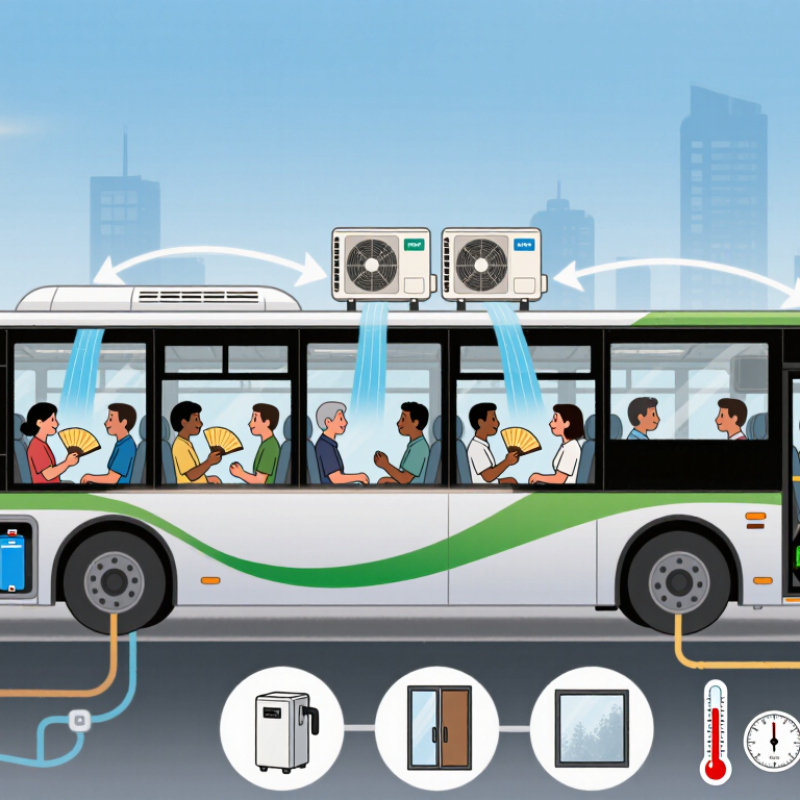
What Hybrid Bus Air Conditioning Is
Hybrid bus air conditioning is a climate-control system designed to work with a bus’s combined electric and combustion-power systems. It cools, heats, and circulates air through the passenger cabin. Unlike a conventional setup driven only by the engine, it may use an electrically powered compressor connected to the vehicle’s high-voltage system.
Power can come from the traction battery, an engine-driven generator, or both, depending on the bus design. That matters. At a stop, the compressor may keep cooling without the engine running, which can reduce idling. Not always. If the battery’s charge is low or cooling demand is high, the control system may start the engine or limit electrical loads. Exact layouts vary, so “hybrid AC” does not describe one universal design.
In practice, the system balances cabin temperature, battery condition, and available power. A driver might notice this on a hot afternoon: airflow stays steady, but the engine starts when the bus needs extra energy. That behavior can seem inconsistent until the power-management logic is understood. Technicians typically check refrigerant pressure, electrical connections, sensors, and compressor operation using procedures suited to the specific system. The hardware is only part of the story; clean filters and clear airflow paths also affect comfort. Even then, crowded cabins and frequent door openings can make temperature control uneven.
Why Is Hybrid Bus AC Important? — What Hybrid Bus Air Conditioning Is
| Dimension | What It Means | Why It Matters | Typical Considerations |
| System definition | Hybrid bus air conditioning cools, dehumidifies, and circulates air in a bus with a hybrid powertrain. | It supports passenger comfort and helps maintain a usable cabin environment in hot or humid weather. | The HVAC system may use mechanically driven or electrically driven components, depending on the vehicle design. |
| Power source | The compressor and other HVAC equipment draw power from the vehicle’s available mechanical or electrical systems. | Air conditioning is a significant auxiliary load, so its operation can affect total energy use. | The actual energy impact varies with vehicle architecture, weather, passenger load, and operating conditions. |
| Stop-start operation | Hybrid buses can stop the combustion engine during some periods when the vehicle is stationary or operating at low load. | HVAC may still be needed when the engine is off, making compressor drive and climate-control strategy important. | Whether cooling continues during engine-off operation depends on the system design and available electrical power. |
| Energy efficiency | Controls can adjust cooling output and airflow to match cabin conditions and demand. | Avoiding unnecessary cooling can reduce HVAC energy demand and help the vehicle use energy more efficiently. | Setpoints, door openings, solar heat, ventilation, and maintenance all influence performance. |
| Passenger comfort | The system manages cabin temperature, humidity, and air distribution throughout the passenger area. | Consistent climate control is especially useful on crowded routes and during frequent stops. | Air distribution should account for the size and layout of the cabin and changing passenger loads. |
| Air quality and ventilation | HVAC ventilation brings outdoor air into the cabin and circulates conditioned air; filtration may be included. | Appropriate ventilation supports cabin air quality, while filtration can help capture some airborne particles. | Filter type and effectiveness vary; filters need inspection and replacement according to maintenance guidance. |
| Maintenance | Routine checks cover items such as filters, belts where fitted, refrigerant circuits, drains, and electrical connections. | A properly maintained system is more likely to deliver reliable cooling and avoid preventable performance loss. | Service procedures should follow the vehicle manufacturer’s specifications and applicable refrigerant-handling rules. |
How Hybrid Bus AC Systems Operate
Hybrid bus AC systems operate alongside the vehicle’s mixed powertrain. In many designs, an electrically driven compressor cools refrigerant even when the diesel engine slows or shuts off at a stop. That matters in traffic. A controller reads cabin temperature, outside air, and battery conditions, then adjusts compressor output and blower speed. Refrigerant carries heat from the cabin evaporator to the condenser, where heat leaves the system. Fans move air across both heat exchangers.
The power source depends on the bus design. Some systems draw from a high-voltage battery, while others use an engine-linked generator or a combination of both. During acceleration, the controller may limit AC demand to preserve available power; during braking, recovered energy can help recharge the battery. The driver usually sets a target temperature, but sensors and control logic do much of the balancing. Small details matter. A blocked filter or weak airflow can make a working system feel ineffective. Hybrid layouts vary, so service checks should follow the vehicle’s technical documentation. Cooling performance can also shift with passenger load, open doors, humidity, and battery temperature. That variability is easy to underestimate.
Why Efficient Cooling Matters for Energy Use
Hybrid buses can use less fuel or electricity than conventional buses, but air conditioning still places a real load on the system. On a hot afternoon, sunlight through the windows and frequent door openings force the cooling equipment to work harder. Efficient cooling matters because it can reduce compressor run-time while keeping the cabin comfortable. Small gains count.
Good performance starts with practical details. Clean filters and clear evaporator coils help air move freely. Well-sealed doors limit the rush of warm air at every stop. A correctly placed temperature sensor also matters; if it sits near a cold vent, it may misread the cabin and trigger unnecessary cooling. These checks are simple, but they are easy to overlook.
There is a trade-off. Turning the system down too far may save energy briefly, yet leave passengers uncomfortable and encourage constant adjustments. Operators can track cabin temperatures and energy use across different routes, then adjust settings to match real conditions. One measurement is not enough. Weather, passenger loads, and stop frequency all change the picture. It is tempting to blame the AC alone, but insulation and operating habits deserve a closer look too.
How AC Supports Passenger Comfort and Health
A hybrid bus may switch between electric and engine power, but passengers experience the cabin as one shared space. Air conditioning helps keep that space comfortable when the bus is full, the sun warms the windows, or traffic keeps doors opening at frequent stops. A steady temperature can make a long ride feel less tiring, especially for older passengers, young children, and people sensitive to heat.
Small details matter. Direct cold air on a passenger’s face can feel unpleasant, while warm, stuffy air may leave people uncomfortable. Well-directed airflow and sensible temperature settings help distribute cooling more evenly. Air conditioning can also reduce excess humidity, so damp clothing and fogged windows are less likely to linger. Comfort is not just luxury; it can help passengers feel settled and make the journey easier to manage.
Cooling does not automatically mean cleaner air. The result depends on ventilation, filters, cabin upkeep, and how often the doors open. Regular inspection helps keep airflow consistent and catches problems such as clogged filters or weak cooling. Maintenance matters. Still, no setting suits everyone, and an icy cabin is not necessarily a healthy one. That is worth remembering. A practical system balances temperature, fresh-air exchange, and passenger needs rather than simply making the cabin as cold as possible.
Why Hybrid Bus Air Conditioning Matters
Air conditioning helps manage cabin temperature and humidity, supporting passenger comfort during a journey. The chart shows general EPA guidance for indoor relative humidity—not a bus-specific standard. Source: U.S. Environmental Protection Agency.
What Affects Hybrid Bus AC Performance and Design
Why Is Hybrid Bus AC Important?
What Affects Hybrid Bus AC Performance and Design
Hybrid bus AC must cool passengers without placing unnecessary demand on the vehicle’s energy system. Its workload depends on outdoor temperature, humidity, passenger numbers, and how often doors open. A crowded bus stopping every few blocks may gain heat faster than one travelling a steady route. Large windows and weak insulation add to the load. Small details matter.
Designers also need to consider the compressor, airflow, controls, and available electrical power together. Poorly directed vents can leave some seats warm while others feel chilly. A temperature sensor near a cool vent may also give misleading readings. That happens. Testing should reflect real routes, including long stops and busy boarding periods, rather than relying only on workshop conditions. Filter condition and refrigerant checks matter too; neglected maintenance can reduce cooling and strain components.
Tips: Keep vents clear, check filters regularly, and record cabin temperatures during different routes. Ask drivers where hot spots appear. Their observations can reveal problems that a single dashboard reading misses. No design is perfect, and a setting that works in mild weather may need adjustment on a humid afternoon.
