
Eco Energies

Top 10 Double Glass Solar Panel Manufacturers in 2026

Double Glass Solar Panels are attracting attention in 2026 as buyers look for modules built to withstand demanding outdoor conditions. Their glass on both sides can protect solar cells from moisture and environmental stress. In bifacial designs, the rear side can also capture reflected light. The actual gain depends on installation, ground reflectivity, spacing, and shading. Glass alone does not guarantee higher energy output.

Solar-cell researcher Professor Martin Green offers a useful research-based perspective: “A module’s laboratory performance is only part of its real-world value.” This is a paraphrase, not a verbatim quotation. It points to the questions that matter when comparing manufacturers: How are durability claims tested? What product warranties are offered? Are power ratings and degradation figures clearly documented? Buyers should also examine independent certifications, manufacturing consistency, and the support available after installation. Small details count. A datasheet can look convincing, yet site conditions may tell another story.

This Top 10 overview examines manufacturers through product design, published specifications, reliability evidence, and market presence. It considers glass thickness, cell technology, bifacial performance claims, and warranty terms without treating any single feature as a guarantee. Rankings have limits; product availability and service can vary by region. Some performance claims also deserve closer scrutiny. Use the list as a starting point, then compare current technical documents and seek project-specific advice before choosing a panel.
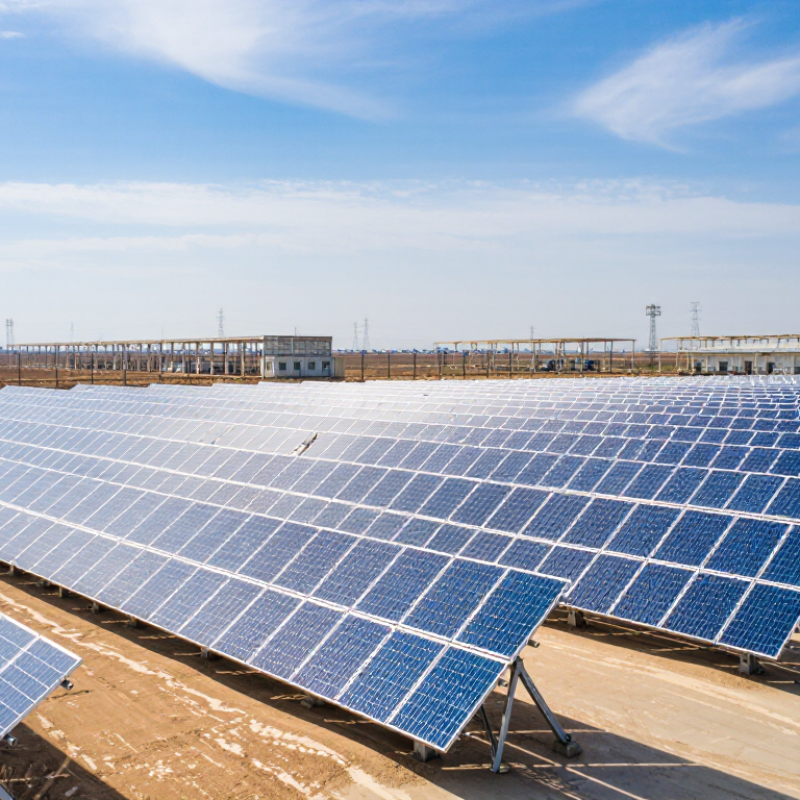
Top 10 Double Glass Solar Panel Manufacturers in 2026

Double Glass Solar Panels: Design, Structure, and Operating Principles

Double-glass solar panels place photovoltaic cells between two sheets of protective glass. The front pane admits sunlight, while the rear pane replaces the polymer backsheet used in many conventional modules. Thin encapsulant layers hold the cells in place and help limit contact with moisture. A sealed perimeter protects the laminate, and an outer frame may support handling and mounting. Some designs use glass on both sides to allow light to reach rear-facing cells.

That light matters. In a bifacial module, cells can produce electricity from sunlight entering either face. Reflected light from pale roofs, gravel, or snow may add rear-side generation, but actual output depends on installation height, surface reflectivity, and shading. Inside each cell, semiconductor material converts absorbed photons into direct-current electricity. Wiring joins the cells into strings; an inverter then converts their output into alternating current for practical use.

Glass-to-glass construction can provide strong resistance to water vapor and environmental exposure, although performance varies by materials and manufacturing quality. It also adds weight. Installers need to check roof capacity, clamp positions, and handling procedures before lifting modules. Details matter.

For project comparisons, look beyond headline efficiency. Review measured power ratings, mechanical-load data, warranty terms, and test conditions. A double-glass panel is not automatically the best choice for every roof. Even small installation compromises can reduce the benefit.

How Manufacturers Are Evaluated for the 2026 Ranking

A credible 2026 ranking should assess more than nameplate wattage. Double-glass modules need scrutiny at the materials level: front and rear glass thickness, edge sealing, encapsulant choice, and frame design. Evaluators should compare independent damp-heat, thermal-cycling, mechanical-load, and potential-induced degradation results. Test conditions matter. A pass under one laboratory protocol does not guarantee decades of outdoor performance.

Field evidence should sit beside laboratory results. NREL’s 2016 review of photovoltaic degradation rates reported a median rate near 0.5% per year across studies. That figure is a useful benchmark, not a prediction for every module. IEA PVPS’s Snapshot of Global PV Markets 2024 puts cumulative global solar capacity above 1.6 terawatts, underscoring the scale of the market. Ranking teams should therefore verify factory quality controls, traceability, warranty terms, and service records—not simply accept capacity claims.

Independent audits can check whether production batches match tested samples and whether quality procedures remain consistent across factories. Evaluators should also examine actual output, not just advertised efficiency, while accounting for climate and installation differences. No scorecard is perfect. Some public data remain incomplete, and warranty language can obscure practical remedies. A transparent ranking should disclose its evidence, weighting, and gaps, then separate verified results from manufacturer-provided claims.

Top 10 Double Glass Solar Panel Manufacturers in 2026

In 2026, comparing the top 10 double glass solar panel manufacturers means looking beyond advertised efficiency. Double-glass modules place solar cells between two glass layers, which can improve protection against moisture and environmental stress. Still, construction varies. Check glass thickness, cell layout, frame design, and stated power tolerance. Ask whether performance and durability claims are supported by independent test reports, not just sales material.

Tips: Request a sample datasheet and warranty terms. Compare temperature coefficients, verified output, and degradation rates. Confirm the module’s weight suits the planned mounting system; glass-on-glass panels can be heavier than backsheet designs. Ask about factory quality controls and how defects are handled. Small details matter. A polished brochure is not proof of consistent production.

For a useful top-10 shortlist, assess manufacturers against the same criteria and review recent shipment references where available. Check whether testing applies to the exact model being quoted. Confirm delivery schedules, replacement procedures, and technical support in writing. These checks take time, and supplier claims can be difficult to compare. I would also leave room for uncertainty: a strong laboratory result cannot guarantee identical performance at every installation site.

Comparing Manufacturer Products, Technologies, and Capabilities

Top 10 Double Glass Solar Panel Manufacturers in 2026

Comparing manufacturers means looking beyond headline efficiency. Double-glass panels place solar cells between two glass layers, which can improve resistance to moisture and environmental stress. Yet glass thickness, frame design, cell architecture, and encapsulant choices differ. These details affect weight, installation needs, and expected performance. A high-efficiency rating alone does not tell the whole story.

Compare product data under similar testing conditions. Check power output, temperature behavior, mechanical-load ratings, and degradation guarantees. For bifacial models, review the stated rear-side gain and the assumptions behind it; reflective ground, mounting height, and row spacing can change actual yield. Ask how production quality is monitored and whether test reports cover the exact panel model. Details matter. A polished specification sheet can still leave practical questions unanswered, and I would not treat a broad warranty as proof of strong field performance.

Tips: Match panel dimensions and weight to the project’s racking and handling limits. Request independent test documentation, not just sales material. Check connector compatibility and installation guidance before procurement. Compare carefully, but leave room for uncertainty: real-world energy output depends on site conditions, system design, and maintenance.

Top 10 Double Glass Solar Panel Manufacturers in 2026 — Comparing Manufacturer Products, Technologies, and Capabilities

How to read this table: Company names and brands are omitted. The entries summarize representative double-glass product configurations and publicly marketed specification ranges found across the global market; they are not a ranking or a one-to-one identification of particular manufacturers. Actual specifications vary by model, market, and production date. Confirm current datasheets and warranty terms before procurement.

Anonymous manufacturer profile Representative cell technology Double-glass construction Representative module power Typical module efficiency range Bifacial capability Common product strengths Warranty pattern commonly offered
Profile 01 Monocrystalline PERC, half-cut cells Glass on front and rear; bifacial module format Approximately 500–560 W Approximately 20.5–21.7% Typical bifaciality: approximately 70–80% Mature technology, broad availability, and compatibility with established utility-scale designs Often 12–15 years for product; performance coverage commonly up to 25–30 years
Profile 02 N-type TOPCon, half-cut cells Glass-glass bifacial construction, commonly in large-format modules Approximately 570–630 W Approximately 21.5–23.3% Typical bifaciality: approximately 80–85% Low temperature-related power loss relative to many P-type designs; suitable for utility and commercial projects Product coverage commonly 12–15 years; performance coverage commonly 30 years
Profile 03 N-type TOPCon, rectangular or large-format cells Dual-glass construction, frequently offered in bifacial variants Approximately 580–640 W Approximately 21.8–23.5% Often specified around 80–85%; check the individual datasheet High output per module and cell layouts designed to reduce inactive spacing Commonly a 15-year product warranty and a 30-year performance warranty, subject to model terms
Profile 04 Heterojunction (HJT), n-type cells Glass-glass construction is common for bifacial HJT products Approximately 600–700 W, depending on format Approximately 22.0–23.5% Typical bifaciality: approximately 85–95% High bifacial response and comparatively low temperature coefficient are common design attributes Some product lines offer long performance terms of up to 30 years; product coverage varies
Profile 05 N-type back-contact (BC) or hybrid back-contact architecture Available in dual-glass variants; bifaciality depends on rear-side cell design Approximately 450–650 W across residential and larger-format product families Approximately 22–24% for higher-efficiency offerings Model-dependent; some back-contact designs prioritize front-side output rather than maximum bifacial response High front-side conversion efficiency and reduced front-side metallization shading Residential product lines may offer extended product and performance terms; verify the specific model
Profile 06 N-type TOPCon, dual-glass bifacial Typically two tempered-glass sheets with an encapsulated cell layer Approximately 430–500 W in smaller-format module families Approximately 21.0–23.0% Commonly marketed as bifacial; rear-side gain depends on site albedo and system design More manageable module dimensions for rooftop and distributed-generation applications Product warranties commonly range from 12–25 years; performance terms often extend to 25–30 years
Profile 07 P-type PERC or N-type TOPCon, depending on product generation Glass-glass variants offered alongside glass-backsheet products Approximately 500–620 W Approximately 20.5–23.0% For bifacial models, published bifaciality depends on cell technology Multiple module formats and power classes can support mixed project requirements Warranty terms differ substantially by series; compare the applicable datasheet and warranty document
Profile 08 N-type TOPCon, bifacial half-cut cells Dual-glass utility module, with frame options varying by design Approximately 570–630 W Approximately 21.5–23.3% Often specified around 80–85% Designed for large ground-mounted arrays; electrical layout and dimensions vary by series Performance warranties of around 30 years are common in this product segment
Profile 09 HJT or TOPCon, depending on the product family Glass-glass bifacial designs offered for selected high-output modules Approximately 500–700 W across different formats Approximately 21.0–23.5% Technology- and model-dependent; consult the published bifaciality figure Portfolio flexibility across cell technologies, module dimensions, and installation segments Warranty duration varies by series; long performance warranties are available in the market
Profile 10 N-type TOPCon or HJT, bifacial configuration Dual-glass construction intended for long-life outdoor exposure Approximately 550–700 W, depending on cell size and module layout Approximately 21.5–23.5% Commonly marketed for rear-side energy generation; realized gain is site-specific High-power options for utility-scale projects, with performance dependent on mounting and ground conditions Product coverage and performance degradation schedules are model-specific; review contractual terms

Key Factors for Selecting a Double Glass Solar Panel Manufacturer

Selecting a double-glass solar panel manufacturer starts with evidence, not a glossy efficiency chart. Ask for the bill of materials, glass thickness, encapsulant type, and test reports for the exact module model. Check that certificates match the production version, not an older design. Small detail, big difference.

Reliability testing matters because glass-to-glass construction does not eliminate moisture ingress, cell cracking, or thermal stress. Review results for damp heat, thermal cycling, mechanical load, and potential-induced degradation under relevant IEC qualification standards. The IEA PVPS Snapshot of Global PV Markets 2024 estimated that cumulative global solar capacity exceeded 1.6 terawatts in 2023. That rapid growth makes consistent factory quality and traceable production records important, not optional. Request recent audit information and ask how the manufacturer handles failed batches.

Warranty length alone tells little. Compare product and performance terms, exclusions, degradation assumptions, and the practical process for making a claim. For bifacial projects, request rear-side performance data and confirm the test conditions. Then assess delivery history, spare-parts support, and response times in your project’s region. A polished datasheet is not a factory audit. I would still leave room for uncertainty: field conditions can expose weaknesses that laboratory tests miss.

Double-Glass Solar Panel Manufacturer Selection: Warranty Degradation Benchmarks

Compare the maximum power-loss rates stated in module warranties. Lower degradation limits indicate stronger long-term power retention, but always review the full warranty terms.

Example limits commonly found in commercial module warranties: up to 1.0% power degradation in the first year and up to 0.4% per year thereafter. These are indicative benchmarks, not universal requirements; check each manufacturer’s current datasheet and warranty.