How to Maximize Your Savings with Solar Panel Energy in 2025
As we enter 2025, the importance of sustainable energy sources continues to gain momentum, with solar panel energy leading the charge in both environmental consciousness and financial savings. The shift towards renewable energy not only addresses the pressing issue of climate change but also offers homeowners an opportunity to significantly reduce their energy bills. With advancements in technology, the efficiency and affordability of solar panels have improved dramatically, making it accessible for a wider range of consumers than ever before.
Maximizing savings through solar panel energy involves understanding various incentives, from government subsidies to local tax breaks, which can substantially offset the initial costs of installation. Moreover, strategic energy consumption and battery storage solutions play a crucial role in optimizing energy usage and ensuring that homeowners can leverage the full benefits of their solar systems. By harnessing the power of solar energy, individuals can contribute to a more sustainable future while reaping economic rewards, highlighting the dual advantages of going solar in today's world.

Understanding Solar Panel Technology for Savings
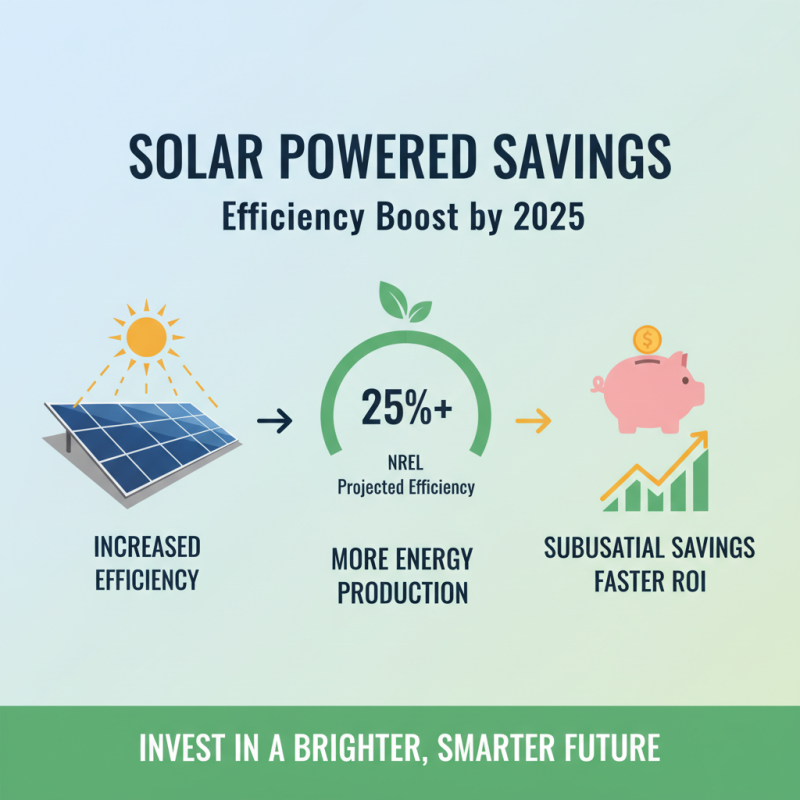
Solar panel technology has evolved significantly, leading to substantial savings for homeowners and businesses alike. By 2025, reports indicate that the efficiency of solar panels is projected to increase, with some models expected to reach efficiencies upwards of 25%, according to the National Renewable Energy Laboratory. This progress not only boosts energy production but also enhances the cost-effectiveness of solar solutions, making them an attractive investment for those looking to maximize savings.
Additionally, the declining costs associated with solar installation have made this renewable energy source more accessible than ever. In fact, the Solar Energy Industries Association reported that the average cost of solar photovoltaic (PV) systems dropped by 70% from 2010 to 2020. As prices continue to decrease, coupled with potential federal tax incentives, consumers can expect quicker return on investment (ROI) periods. By leveraging advancements in solar technology and cost reductions, investing in solar energy can lead to significant long-term savings on electricity bills, with some studies suggesting potential savings of up to 50% for average households over a 20-year span. This synergy of improved technology and reduced costs offers an exciting opportunity to maximize savings through solar energy in the near future.
Evaluating the Cost-Benefit of Solar Panel Installation
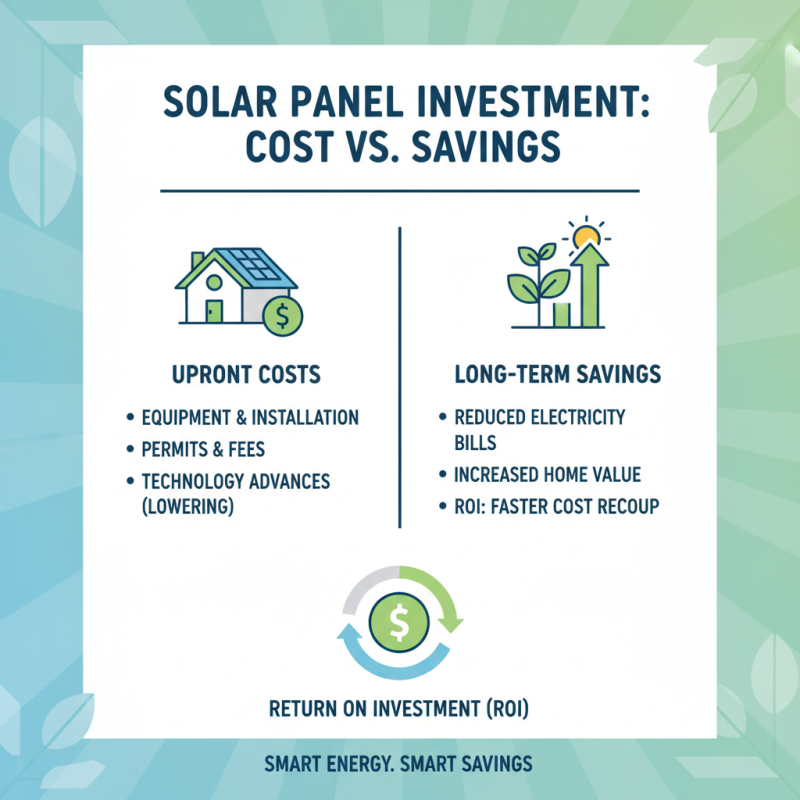
When evaluating the cost-benefit of solar panel installation, homeowners should consider several key factors that influence both upfront costs and long-term savings. The initial investment in solar panels, including installation and necessary permits, can be substantial. However, advances in technology have made solar energy systems more efficient and accessible, often resulting in significant reductions in electricity bills. By calculating the expected return on investment (ROI), homeowners can better understand how quickly they can recoup their costs through energy savings.
Additionally, potential government incentives and tax credits can further enhance the financial benefits associated with solar panel installation. These incentives effectively lower the net cost of installation and improve the overall savings potential. It is also essential to consider regional energy prices and solar exposure, as these factors can significantly affect the overall savings generated from a solar energy system. Analyzing these elements through a detailed cost-benefit assessment will provide a clearer picture of how solar panels can contribute to long-term financial gains in the coming years.
Government Incentives and Rebates for Solar Energy in 2025
In 2025, government incentives and rebates for solar energy are set to significantly enhance the economic feasibility of solar panel installations for homeowners and businesses alike. According to the Solar Energy Industries Association (SEIA), federal tax credits are expected to remain a pivotal component of solar financing, allowing consumers to deduct a portion of their solar installation costs from their federal taxes. This policy alone could cover up to 30% of the installation price, making renewable energy significantly more accessible.
Moreover, various states are implementing their own rebate programs and financial incentives to promote solar energy use. For instance, data from the National Renewable Energy Laboratory indicates that states like California and New York will provide cash rebates that average between $1,000 and $3,000 for qualifying solar installations. This trend is not just limited to individual states; relying on federal and state rebates, homeowners could see total savings of over $15,000 on a typical solar installation over a 25-year lifespan based on projected energy savings, which, in turn, drives the adoption of sustainable practices across the nation. As these incentives become more robust, maximizing savings through solar panel energy in 2025 will be more achievable than ever.
How to Maximize Your Savings with Solar Panel Energy in 2025
This chart illustrates the estimated savings from solar panel installations over the next five years, taking into account government incentives and rebates available in 2025.
Strategies to Increase Energy Efficiency with Solar Systems
Implementing solar panel systems is a rewarding strategy for increasing energy efficiency and maximizing savings. Data from the U.S. Department of Energy indicates that residential solar installations have grown over 20% annually, reflecting a shift towards more sustainable energy solutions. Homeowners can optimize energy efficiency by strategically placing solar panels, ensuring that they receive maximum sunlight exposure throughout the day.
According to a report by the Solar Energy Industries Association, combining solar panels with energy-efficient appliances can decrease overall energy consumption by up to 30%, further enhancing savings on utility bills.
In addition, integrating energy storage systems with solar panels allows homeowners to store excess energy generated during peak sunlight hours. This stored energy can be used during periods of low sunlight or higher energy demand, leading to significant cost reductions. The National Renewable Energy Laboratory notes that households equipped with battery storage can achieve energy savings of up to 50% compared to those without such systems.
Pairing solar technologies with smart home solutions can also lead to better energy management, allowing users to monitor and control their energy usage efficiently. Adopting these strategies not only contributes to personal savings but also supports broader sustainability goals in the community.
Long-term Financial Planning for Solar Panel Investments
Investing in solar panels is not only an opportunity to contribute to sustainability, but it also offers significant long-term financial benefits. According to the Solar Energy Industries Association (SEIA), the cost of solar photovoltaic (PV) systems has fallen by over 80% since 2010. This dramatic decrease in cost, combined with various incentives, allows homeowners and businesses to secure a solid return on their investment. By 2025, it’s projected that households with solar systems can save between $10,000 to $30,000 over the system's lifespan, depending on their location and energy usage.
Long-term financial planning plays a crucial role in maximizing these savings. The National Renewable Energy Laboratory (NREL) indicates that homeowners who finance their solar systems through a loan can significantly improve their cash flow within just a few years. Solar energy can reduce or even eliminate electricity bills, providing immediate savings that can be reinvested or saved for future expenses. Moreover, embracing solar energy not only hedges against rising electricity costs but also increases property values—homes with solar installations typically sell for 4% more on average than those without. As of 2025, it’s essential for potential investors to consider solar panels as a strategic part of their financial portfolio, taking advantage of tax credits and incentives, while also assessing financing options that best suit their financial strategies.