Why Choose Robot Lithium Batteries for Your Technology Needs?
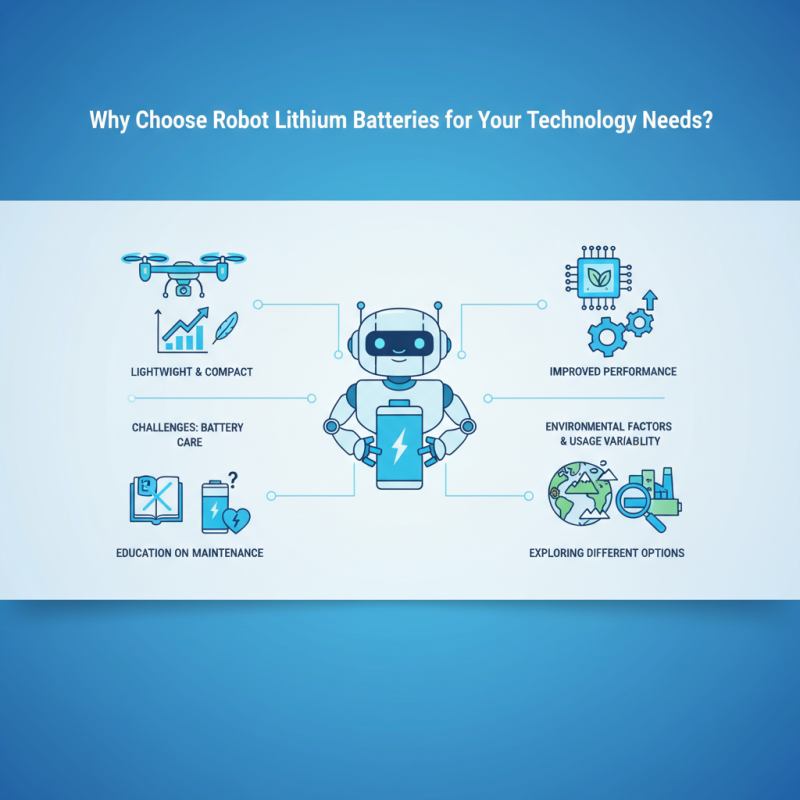
In today’s tech-driven world, finding the right power source is crucial. Many industries are shifting towards robot lithium batteries. These batteries offer unique advantages for various applications. They are lightweight and compact, making them ideal for robots and drones.
Robot lithium batteries deliver high energy density. This means they can power devices longer without adding weight. However, some users may face challenges, like understanding battery care. Improper handling can reduce battery life. This calls for better education on battery maintenance.
Considering robot lithium batteries means focusing on efficiency and sustainability. With advancements in battery technology, users can expect improved performance. However, it’s important to acknowledge that not all environments suit these batteries. Effectiveness varies based on usage. Exploring different options is necessary for optimal outcomes.
Benefits of Robot Lithium Batteries for Advanced Technologies
Robot lithium batteries are transforming modern technology. Their compact size and high energy density make them ideal for advanced devices. These batteries last longer and charge faster than traditional options. As a result, they power everything from drones to electric vehicles efficiently.
One advantage of using robot lithium batteries is their lightweight design. This feature enhances the performance of robots and gadgets alike. However, they may not be suitable for extreme conditions, as temperature fluctuations can impact their lifespan. Maintaining optimal operating temperatures is crucial for maximum efficiency.
Moreover, these batteries support longer usage times. Robotics and automation rely on uninterrupted power. Yet, the initial cost can be daunting for some users. Although the investment pays off over time, it’s essential to weigh the pros and cons. With proper consideration, robot lithium batteries can elevate technology to new heights.
Comparative Analysis: Lithium vs. Other Battery Types
When comparing lithium batteries to other types, several factors stand out. Lithium batteries have a higher energy density. This means they can store more energy in a smaller space. In contrast, lead-acid batteries are bulkier and heavier. They often struggle in compact applications. The weight alone can be a deal-breaker for many technological uses.
Another significant aspect is the lifespan. Lithium batteries typically last longer than NiMH or lead-acid options. Users might find that although lithium batteries cost more upfront, they require fewer replacements over time. This could lead to cost savings in the long run. However, their performance can degrade over many cycles. Users need to consider how often they will recharge these batteries.
Charging speed is also a concern. Lithium batteries charge quickly, making them convenient for tech devices. Other options like nickel batteries can take longer and require careful charging. But not all users are aware of heat generation during charging. This can lead to reduced efficiency, which is often overlooked. While lithium batteries shine in many areas, they also carry their set of challenges. Users must weigh these intricacies when making choices.
Why Choose Robot Lithium Batteries for Your Technology Needs?
This chart compares the energy density, charge cycle lifespan, and weight of lithium batteries with other common battery types such as Nickel-Cadmium (NiCd) and Lead-Acid batteries. As seen, lithium batteries offer superior energy density and longer lifecycle, making them ideal for modern technology applications.
Key Features of Robot Lithium Batteries for Enhanced Performance
Robot lithium batteries stand out due to their exceptional energy density. They can store more energy in a smaller space compared to traditional batteries. According to industry reports, these batteries can deliver up to 260 watt-hours per kilogram. This ensures that devices run longer on a single charge, which is crucial for modern technology.
Another key feature lies in their rapid charging capabilities. Many lithium batteries fully charge in just 1-3 hours. This is significant for users needing quick turnaround times. Fast charging reduces downtime, promoting efficiency in applications like robotics and drones. However, it's important to note that rapid charging can shorten battery life if not managed properly.
Safety features also distinguish robot lithium batteries. These batteries often include built-in mechanisms to prevent overheating and overcharging. Reports indicate that incidents of battery failures have significantly decreased as manufacturers emphasize safety. Yet, while improvements are notable, continuous advancements and education around proper usage remain necessary to mitigate risks.
Applications of Robot Lithium Batteries in Modern Devices
Robot lithium batteries are revolutionizing various modern devices. Their lightweight design and high energy density make them ideal for robotics, drones, and electric vehicles. According to industry reports, lithium batteries can store up to 200 Wh/kg, which significantly enhances device performance. This energy efficiency leads to longer operational times, which is essential for autonomous systems.
In robotics, these batteries enable precision and reliability. They power everything from industrial robots to consumer gadgets. Drones, using lithium batteries, can achieve flight times exceeding 30 minutes, making them efficient for aerial surveys or deliveries. The flexibility of these batteries allows integration into multiple platforms, boosting innovation.
Tips: Always check battery specifications and ensure they meet your device’s demands. This can prevent potential malfunctions. Regular maintenance can also prolong battery life, ensuring consistent performance. Improper handling or storage can lead to efficiency loss or safety hazards. Being mindful of these aspects is crucial for optimal use.
Why Choose Robot Lithium Batteries for Your Technology Needs?
| Application Area | Advantages of Lithium Batteries | Key Features |
| Robotics | High energy density | Long cycle life |
| Drones | Lightweight | Rapid charging capability |
| Electric Vehicles | Sustainability | High discharge rates |
| Portable Electronics | Low self-discharge | Compact size |
| Home Energy Storage | Longer lifespan than traditional batteries | Scalability |
Environmental Considerations and Sustainability of Robot Lithium Batteries
Robot lithium batteries are gaining attention for their environmental benefits. These batteries are lighter and more efficient than traditional options. They use less energy to charge, resulting in a smaller carbon footprint. This efficiency means fewer resources are consumed over time. However, battery disposal and recycling remain key concerns.
Sustainability is vital as technology advances. Lithium mining can impact local ecosystems. Responsible sourcing is crucial to minimize damage. Improvements in recycling processes can help reduce waste. Innovation in this sector can lead to a more circular economy.
Despite their advantages, robot lithium batteries are not without challenges. As demand grows, we must address ethical mining practices. Continuous research and development can push for more sustainable solutions. Balancing technology needs with environmental stewardship is essential for future success.