What is the Best Solar Monitoring System for Your Home?
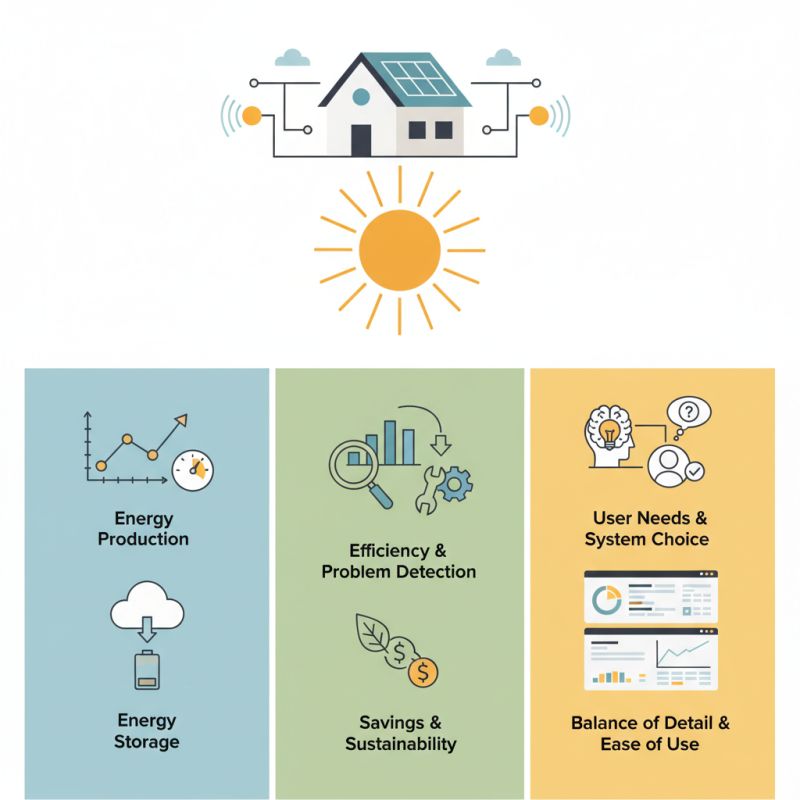
When considering solar energy for your home, choosing the right solar monitoring system is crucial. Dr. Susan Hale, a solar energy expert, emphasizes, "The right monitoring system can greatly enhance energy efficiency." Understanding your energy production is key to maximizing savings and sustainability.
A solar monitoring system allows homeowners to track real-time performance. It shows how much energy your solar panels generate daily. This data can highlight inefficiencies, prompting necessary action. Poor performance might indicate issues needing quick resolution, ensuring optimal energy output.
Selecting a solar monitoring system can be daunting. Not all systems are created equal. Some might provide excessive information, confusing users rather than empowering them. A balance between detail and ease of use is essential. Homeowners must reflect on their needs, as the ideal system varies by individual. A thoughtful choice ensures you can fully enjoy the benefits of your solar investment.
Overview of Solar Monitoring Systems and Their Importance
Solar monitoring systems play a crucial role in maximizing the efficiency of home solar installations. They allow homeowners to track energy production and consumption in real-time. By providing data on system performance, these systems help users identify issues early. Problems can lead to reduced energy output. Monitoring can prevent costly repairs down the line.
Installing a solar monitoring system can be a complex decision. Many options are available, each with different features. Some may prioritize real-time data, while others offer detailed reports. Understanding your individual needs is essential. It’s easy to feel overwhelmed by choices. Take time to evaluate what will serve you best.
Data analytics is another key aspect. It provides insights into energy efficiency over time. However, this information can also cause anxiety. Homeowners might worry about performance dips or solar output fluctuations. Embracing these technologies can be a learning curve. A willingness to adapt is necessary. By addressing concerns and questions, homeowners can find the right monitoring system for their unique situation.
What is the Best Solar Monitoring System for Your Home? - Overview of Solar Monitoring Systems and Their Importance
| Feature |
Description |
Importance |
| Real-Time Monitoring |
Allows users to see current energy production and consumption |
Helps in identifying electrical issues and optimizing energy use |
| Mobile App Accessibility |
Provides access to data via smartphones and tablets |
Enhances user convenience and engagement |
| Historical Data Reports |
Tracks long-term energy production trends |
Facilitates decision-making for system upgrades |
| Alerts and Notifications |
Sends alerts about system performance issues |
Prevents potential damage and ensures reliability |
| Energy Savings Calculation |
Estimates savings compared to traditional energy sources |
Provides insight into financial benefits of solar adoption |
| Integration with Smart Home Systems |
Works with other smart devices for optimized energy use |
Enhances overall home efficiency |
Key Features to Look for in a Solar Monitoring System
Choosing the right solar monitoring system for your home is essential. Look for intuitive interfaces that simplify your experience. You want an easy-to-read dashboard. It should show real-time energy production.
Graphs can help visualize your energy usage patterns. Data tracking capabilities are crucial. A good system will store historical data. This can aid in identifying trends. You might find unexpected spikes in usage. Alerts for system performance issues are also valuable. You want to be informed if something goes wrong.
Integration with other smart home devices can enhance functionality. Consider how well it connects with your existing setup. Yet, not all systems will play nicely with others. Compatibility is key to a cohesive home energy strategy. Evaluate these features carefully to ensure you make an informed decision.
Popular Solar Monitoring Systems Available for Homeowners
When choosing a solar monitoring system, consider various popular options available for homeowners. These systems help track energy production and usage, making them essential for effective solar management. Popular choices often include mobile applications and dashboard displays that provide real-time data. Many users appreciate systems with user-friendly interfaces. A clear display can simplify monitoring energy output.
Tips: Look for a system that offers alerts for performance issues. This feature can help catch problems early. User reviews highlight the importance of compatibility with solar panel setups. Ensure the system aligns with your existing equipment.
Another noteworthy feature is energy consumption tracking. Some systems provide insights into how much energy your household uses. This data can help identify trends and opportunities for energy savings. However, remember that not all systems may cover your needs. Research thoroughly to avoid regrets later on. Choosing the right system can improve your solar energy experience and boost savings.
Installation and Setup Process for Solar Monitoring Systems
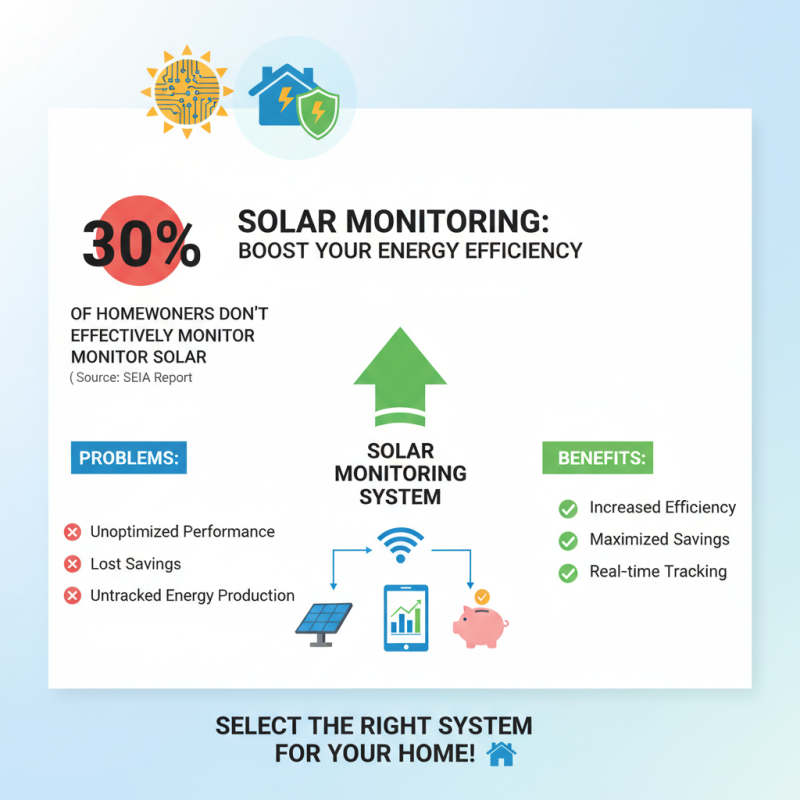
Installing a solar monitoring system can significantly enhance the efficiency of your solar energy setup. It's crucial to select an appropriate system that suits your home’s specific energy needs. According to a report from the Solar Energy Industries Association (SEIA), nearly 30% of homeowners do not monitor their solar systems effectively. Failing to track energy production can lead to unoptimized performance and lost savings.
The installation process typically involves a few straightforward steps. Begin by choosing suitable locations for the sensors and terminal connections. Most systems require a Wi-Fi connection to transmit data. Professional installers often have the expertise to optimize placement. However, some homeowners choose to install systems themselves. This can lead to challenges, such as misalignment of solar panels or interference issues.
Once installed, the setup process requires calibration. Many systems offer user-friendly interfaces. Yet, some users report frustration with initial configurations. Patience is key during this stage, as analytics need time to gather data accurately. Ultimately, an effective setup ensures that you don’t miss out on valuable insights. This can lead to better decision-making regarding energy shifts and costs, significantly impacting overall savings.
Evaluating the Cost-Effectiveness of Solar Monitoring Solutions
Solar monitoring systems offer homeowners a way to track energy production and consumption. Evaluating the cost-effectiveness of these solutions is crucial. A recent report indicated that installing a solar monitoring system can increase energy savings by up to 30%. However, initial costs can be high, ranging from $200 to $1,500 depending on features.
Tips: Look for systems that offer real-time data. This can help in making immediate changes to energy usage. Using energy at peak production times can maximize savings.
Some homeowners might find themselves struggling with complex setups. While many systems are user-friendly, the learning curve can be steep. Additionally, the long-term savings must outweigh the upfront investment. Many reports suggest that choosing a comprehensive system, even if slightly more expensive, often leads to greater savings over time.
Tips: Compare different systems based on their return on investment. This can help in making an informed decision. Don't forget to consider customer support and warranties. They can save you money if issues arise later.